EUR
EUR

Why Is My Hair System Poofy?
Posted by Santana Fell on Sep 21, 2026
Quick answer: A poofy hair system is completely normal, especially until the first 1–2 washes. Poofiness happens because new hair is fresh, light, and product-free, so it naturally stands up instead of lying flat. The fix is simple: press the hair down with a blow dryer and the back of your hairbrush, add a leave-in conditioner or serum for weight, and give it time till about one or two washes to settle.
Causes, Fixes & Hair Replacement Stylist’s Answers
Below, Superhairpieces’ senior hair system stylist Huma breaks down exactly why poofiness happens and how to control it for good.
If you've ever searched "why does my hair system poof up" or "is it normal for a new hair unit to look poofy," you're not alone. We pulled together the most common hair system user questions, including these two we hear all the time:
"Why does my hair system poof up so bad by like 2 pm or after drying, and it's fine when wet? Looked flat and natural in the morning; by afternoon it's like a helmet."
"First system just came in, and it looks WAY poofier than the stock photos. Is this normal, or did I mess up the order?"
We sat down with one of our senior stylists to answer these questions in detail, everything from what causes poofiness to density and base type to scalp care and sleep habits. We've laid it all out for you. Read for some tips and tricks from the hair industry expert.
Is It Normal for a New Hair System to Be Poofy?
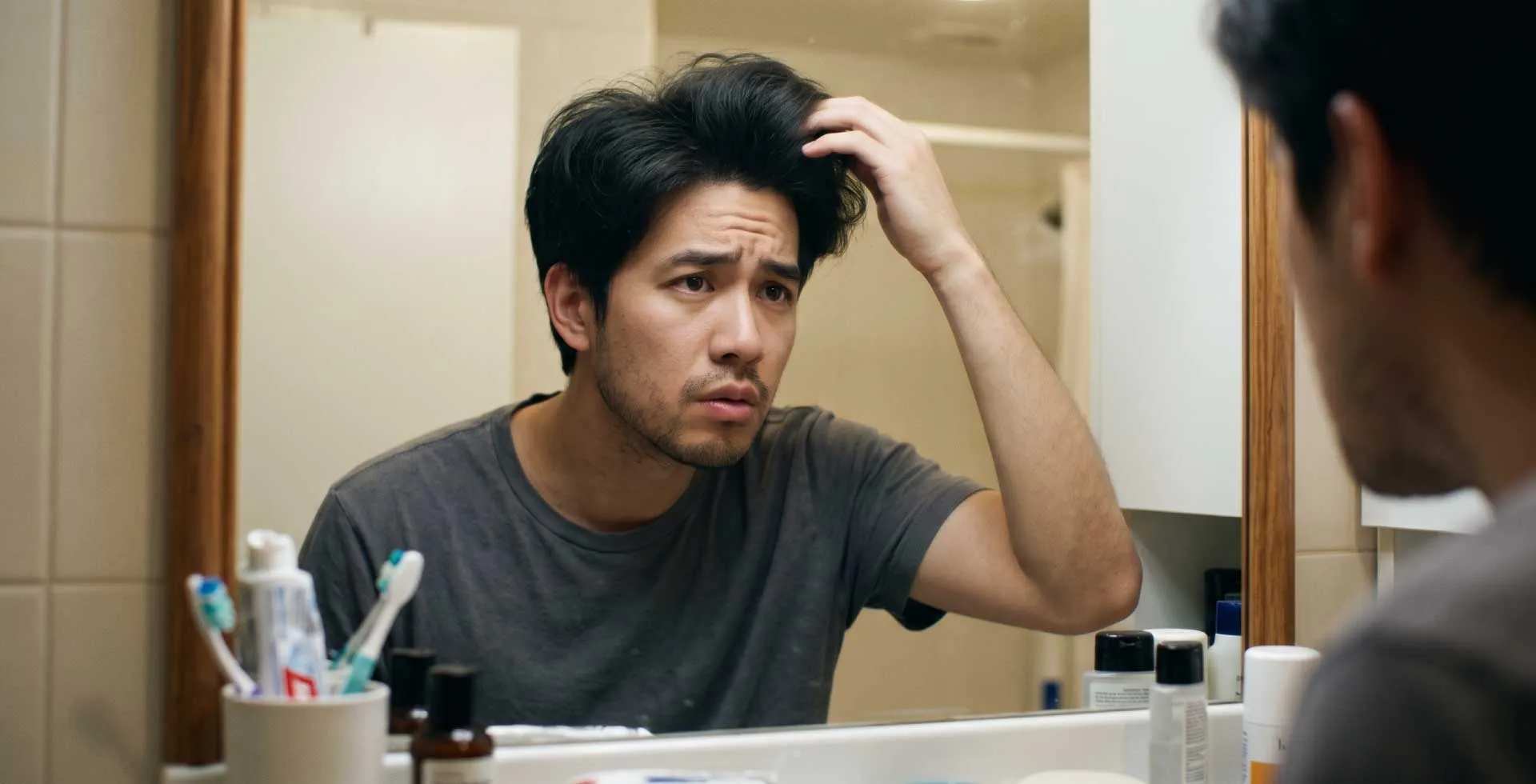
Yes, 100%. A brand-new hair system is generally poofy because the hair fibers are fresh and have never been treated with any styling product. No added weight or moisture holds the strands down, so the hair naturally stands up and looks fuller, sometimes much fuller than it will once it's used regularly.
This is true even when a unit looks poofier than the stock photos. Stock photos are usually shot on units that have already been washed, conditioned, and styled a few times. Your brand-new system simply hasn't gone through that process yet.
The good news is that poofiness is temporary and predictable. It typically settles after one to two washes, once shampoo, conditioner, and leave-in products build up on the hair shaft and add weight.
Why Does a Hair System Poof Up After Drying, but Look Fine When Wet?
This is one of the most common questions users ask, and it has a clear explanation. Wet hair is naturally weighed down by water, which is why a system looks flat and natural right after a shower or in the morning. As the hair dries, often by early-to-mid afternoon, that weight disappears, and the fibers spring back up, especially if no product was used.
Why does poofy hair often tangle?
If the hair is left completely dry with nothing applied to it:
The hair texture becomes dry and starts to tangle at the roots
Tangled roots lead to breakage within days if not addressed
Breakage shows up as excess shedding and hair loss complaints
Dry, tangled hair also makes clients more likely to scratch unconsciously while sleeping, which further damages the system.
The fix is always the same. Apply a pomade, leave-in conditioner, hair serum, or hair oil once the system is dry to restore the moisture and weight that keep it looking natural through the afternoon and evening.
How Long Does It Take for Poofiness to Settle?
Most hair systems settle within one to two washes. Each wash-and-condition cycle deposits a small amount of product onto the hair shaft, gradually reducing volume and encouraging the hair to lie flatter and more naturally.
If a client doesn't want to wash the system yet, they can still reduce poofiness by applying leave-in conditioner, serum, or pomade directly. The hair will calm down even without a full wash.
Alternatively, if they have an oily scalp and want to avoid washing their system, Huma recommended using a towel or paper towel to dab sweat and pat their hair system down rather than washing.
Does poofiness get worse over time?
No, as long as the system is properly cared for, poofiness does not progressively worsen. There are, of course, some preventive methods to keep in mind. If you sleep on a pillow with no protection and no product, hair "explodes" overnight, whether it's a system or your own hair. The issue isn't time; it's whether you use proper care (product, sleep protection, and gentle handling) consistently. We recommend using a silk pillowcase, silk bonnet, or hair net while you sleep to avoid poofiness or flat hair on one side in the morning.
Pro tip: Retain the net the hair system is sent in and use it to secure your system while sleeping.
How to Avoid Poofiness in a Hair System
Here's the exact technique stylists use to control poofiness on a freshly installed or freshly washed unit:
Blow-dry while brushing. Use a brush to gently push the hair forward, flip it back, and pull it into place as you dry.
Press the hair with the back of a brush or comb. Once the hair is mostly dry, use the back of the brush (or your fingertips) to press the hair down flat in the direction it should lie.
Continue blow-drying on a low setting in the same direction while pressing, rather than drying and pressing separately.
Never brush from the front. Always press down the front and brush only from slightly behind to avoid pulling the hairline and eventually lifting it.
Apply a leave-in conditioner. This builds moisture and light oil into the hair shaft, which naturally flattens excess volume.
Add a hair serum for stubborn poofiness. Spray lightweight hair serum or blowout spray in and press down to add extra weight without looking greasy.
How to fix the poofiness of a hair system?
Best Products to Reduce Hair System Poofiness
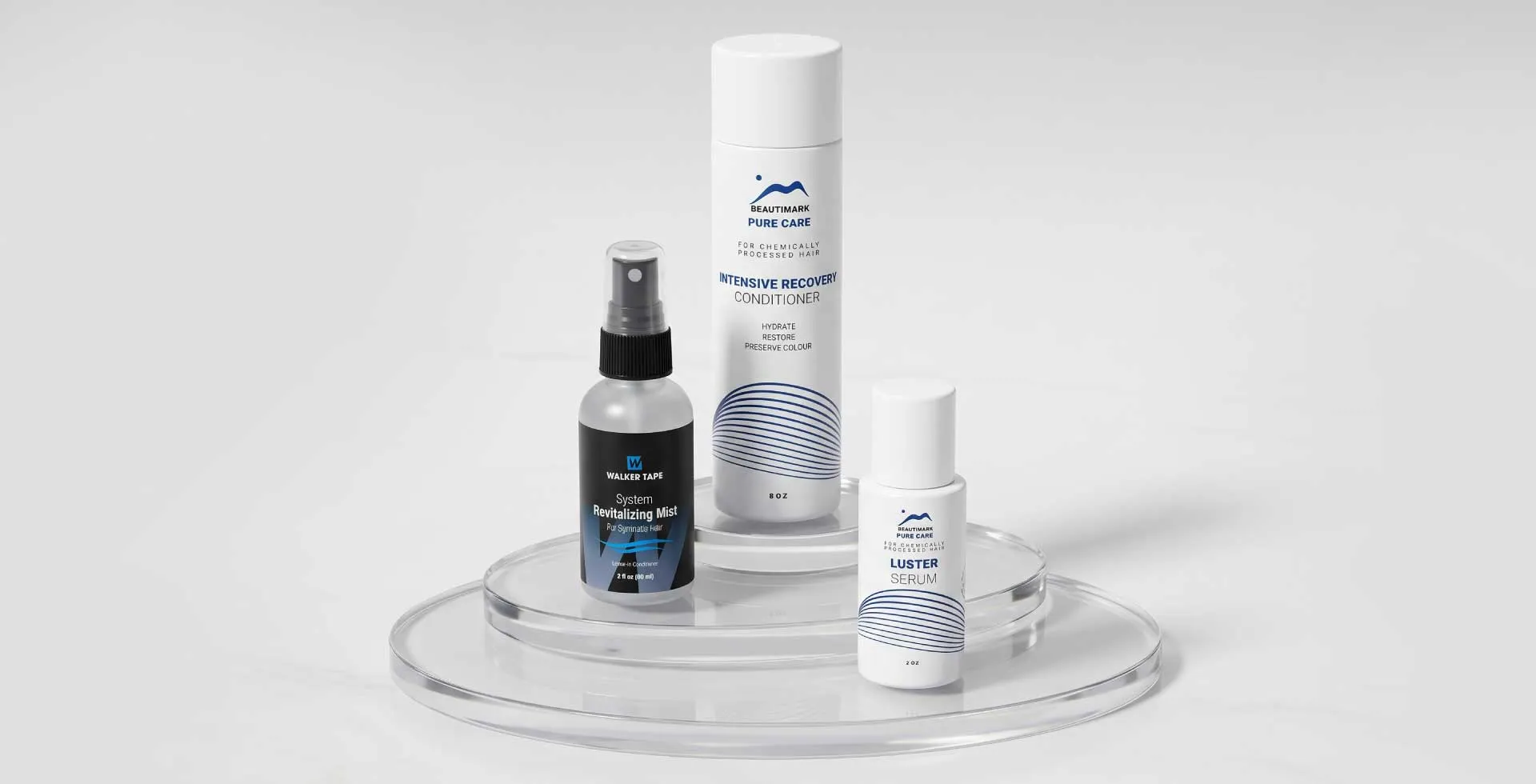
Leave-in revitalizing conditioner: builds moisture and weight onto the hair shaft.
Moisture repair conditioner: good alternative leave-in option
Lightweight hair serum
Blowout spray: sprayed in, then pressed down with a brush
Pomade or hair oil: best for controlling poofiness later in the day, after the system has fully dried
Does Hair Density Cause Poofiness?
Density plays the biggest role, but it isn't the only factor.
Higher density = more poofiness. More hair layers on the base naturally create more volume and more poof.
Density should match the client's natural hair density. A client with roughly 90% natural density shouldn't be fitted with a very high-density system (like 135%); it will look unnaturally full and be harder to keep flat.
Base type also affects poofiness independently of density (more on that below), so two systems with the same density can behave very differently depending on the base material.
Does Hair Texture (Curly or Afro Hair) Affect Poofiness?
Surprisingly, no. Texture is not a major factor. Curly and afro-textured systems (including 100% curl units) can be managed as well as straight hair once you use the right products consistently. The real trigger for poofiness isn't curl pattern; it's dryness. Once any hair type dries out without product, it tends to poof or "fly away" and lose its shape, regardless of texture. The one major exception is synthetic gray hair.
Synthetic Gray Hair: Why It's Harder to Control
Synthetic gray hair is significantly more prone to poofiness, wiriness, and "standing up" compared to human hair, and it's genuinely harder to train down:
Synthetic fibers can't be chemically treated or trained the way human hair can
High heat will twist, break, or melt synthetic strands. Use only low-heat blow-drying combined with brushing (back-of-brush pressing).
In-salon, a steamer can temporarily control standing/wiry synthetic hair, but it tends to revert once the client washes it at home.
Does the Hair System Base (Lace, Mono, Skin/PU) Affect Poofiness?
Yes, base material has a real, measurable effect on poofiness, independent of density or texture.
Mono bases (e.g., welded mono systems) are harder to place flush against the scalp, which often leaves a slight gap between the base and the scalp. That gap creates lift and contributes to poofiness.
Lace bases, full skin, skin-with-lace, and skin-with-poly bases sit flatter and closer to the scalp, which significantly reduces poofiness.
Even at identical density, a lace-based system will control poofiness noticeably better than a mono-based system.
Bottom line: if minimizing poofiness is a top priority, lace or skin-based systems outperform mono bases.
How Often Should You Wash a Hair System?
Washing frequency isn't one-size-fits-all; it depends on the user’s activity level, sweat, and product use:
Heavy sweaters/gym-goers: wash more frequently, since sweat breaks down the adhesive bond over time
Low-activity clients: wash less often. If hair isn't visibly messy or greasy, there's no need to wash it
Oily scalp but low activity: instead of washing, dab sweat and oil with a paper towel or cloth
General guideline: once or twice a week is plenty for most clients who aren't heavily sweating or using styling products like gel or hairspray
Showering without washing the system: a shower cap can keep the unit dry while still allowing a normal shower.
Over-washing damages the system faster and shortens the time between services. Excess washing breaks down the bond and shortens the unit's lifespan.
Washing depends entirely on your lifestyle and how your scalp behaves.
Post-Installation Care: The First 24–48 Hours
Proper aftercare starts immediately after installation:
No washing for 24–48 hours after install, so the adhesive has time to fully bond
Avoid heavy sweating during this window. Moisture (hot or cold) breaks down glue and tape and compromises the bond.
Hold the system with a finger while brushing, rather than brushing directly against it. Brushing without support puts pressure on the hair shaft and can make the edge feel like it's lifting, even when it isn't
Everyday Styling Tips to Keep the Hair System Flat
This isn't just a one-time installation rule; it applies every time the system is washed or styled going forward:
Pat dry with a towel immediately after washing; never rub
Press the hair down with fingertips or the back of a brush/comb after washing or styling, every single time
Apply leave-in conditioner right after washing and press the hair into place while it's still damp
Water (hot or cold) softens adhesive, so gentle handling post-wash protects the bond as much as it protects the style
Scalp Itch and Scratching with a hair system: Causes and Fixes
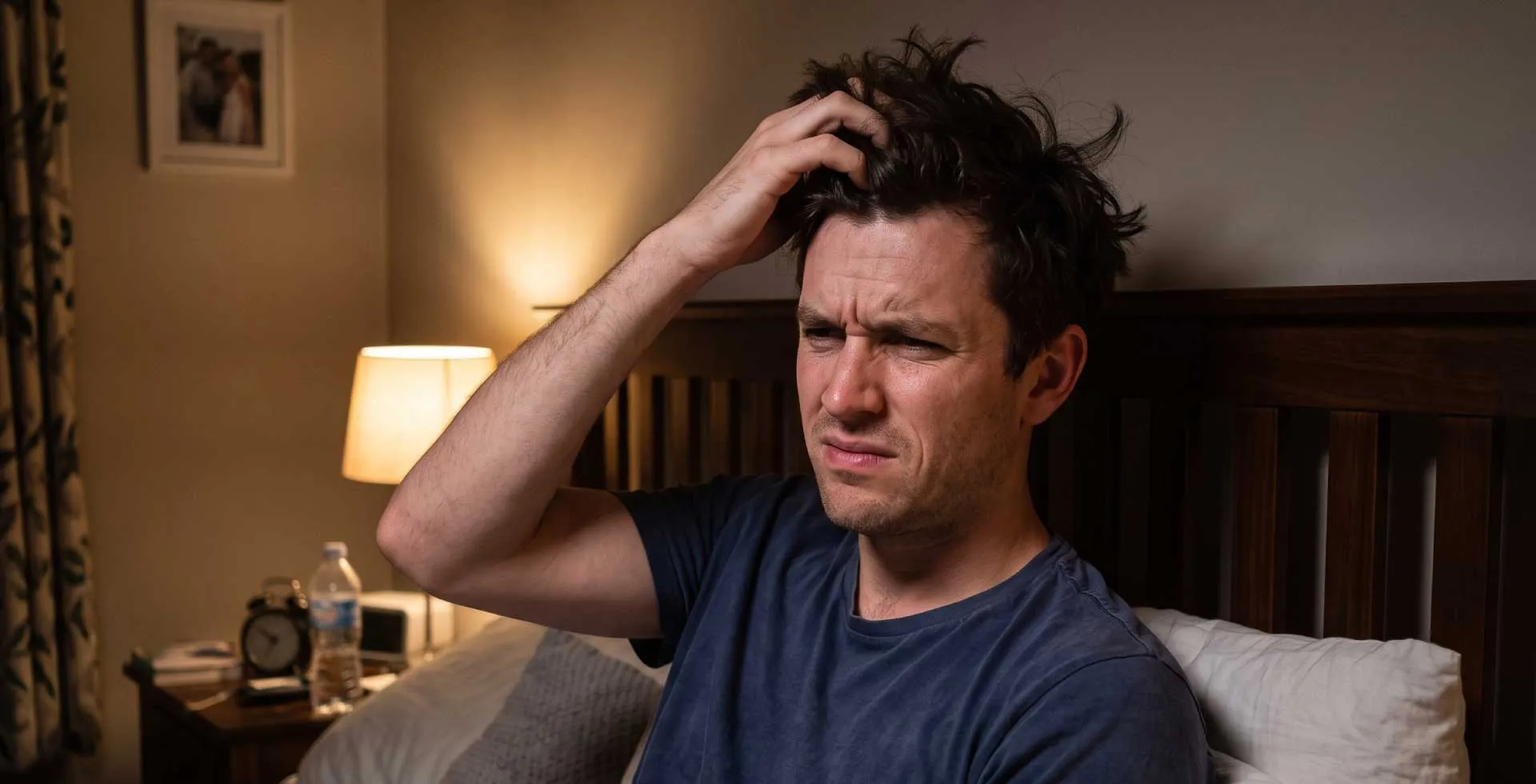
Itching is common with hair systems, especially for clients with regrowth or sensitive scalps:
New hair regrowth pokes through the scalp, which naturally causes irritation and itchiness; this is a normal part of the process, not a defect
Pat the itchy part; never scratch. Clients should use leave-in conditioner on he hair and press the base with their knuckles to relieve itchiness rather than scratching with nails.
Nighttime scratching is often unconscious. Clients who keep damaging the same spot on their system are frequently scratching in their sleep without realizing it. Asking a partner to observe overnight is a simple way to confirm this. Use a protective net or silk scarf to prevent scratching while sleeping.
Detangler reduces root knotting. Since knots and tangles often trigger the urge to scratch in the first place, a good detangling product reduces both tangling and the resulting scratching damage
Dry Scalp and Eczema
For clients with extremely dry scalps or eczema:
Leave-in conditioner is the key product for controlling itchiness caused by dryness
Apply "No Sweat" spray before installation, even for dry-scalp clients, because it creates a barrier between the scalp and the system. (Sweat and dryness are two separate issues: a scalp can be dry and still sweat, since dryness relates to oil production, not moisture output)
Skin prep vs. scalp protector:
Apply skin prep to the system's base (not the scalp) to help the tape adhere properly, especially on lace or lace-front units. It intentionally dries out the surface so tape bonds correctly.
Apply scalp protector to protect the scalp itself.
You can use both together; they serve different purposes and aren't interchangeable.
Sleeping Care: How to Reduce Poofiness Overnight
Sleep habits have a major impact on next-day poofiness:
Always sleep with a hair net or silk cap/pillowcase. Without protection, hair systems (and natural hair) flatten unevenly and "poof up" overnight from friction against the pillow; the same reason anyone wakes up with bedhead.
A net or silk cap distributes pressure evenly across the whole system, so one side doesn't flatten more than the other.
If one side does end up flatter in the morning (common for side-sleepers), the fix is simple: brush the roots upward and outward, pulling the hair forward first, then back into place, to restore natural shape and direction.
Don’t let a poofy system stop you from trying your new look. Poof is temporary; your persona isn’t! Try the hair systems today for your new look!

 Likes
Likes