USD
USD

Unusual Hairline? Here's How Our Stylist Handles It
Posted by Santana Fell on Jul 14, 2026
We see many clients with unusual balding patterns, and can safely say that we have seen it all and have a solution to every hair loss problem!
While male pattern baldness is extremely common, many men experience hair thinning differently and have varied preferences for their hairlines. When it comes to hair systems, no two hairlines are the same, and for men exploring non-surgical hair replacement, that's often the biggest worry. What happens if your hairline is asymmetrical? What if you have a cowlick that won't cooperate with the rest of your hair, a scalp scar, deep ridges on the scalp, an unfortunate burnt area on one side of your hair, or a recession so high that a standard system just won't blend?

We sat down with Matilda, one of the many talented hair system stylists at Superhairpieces, who has 18 years of experience in the hair system industry.
She tells us how she blends unusual hairlines that don't fit into a regular stock template. Matilda’s answers won't just leave you breathing a sigh of relief; they'll actually make you look forward to wearing a unit!Can hair systems be used for irregular hairlines?
The short answer - YES! Here is what our stylists do:
Which hair system should be used when the temple recession is too high?
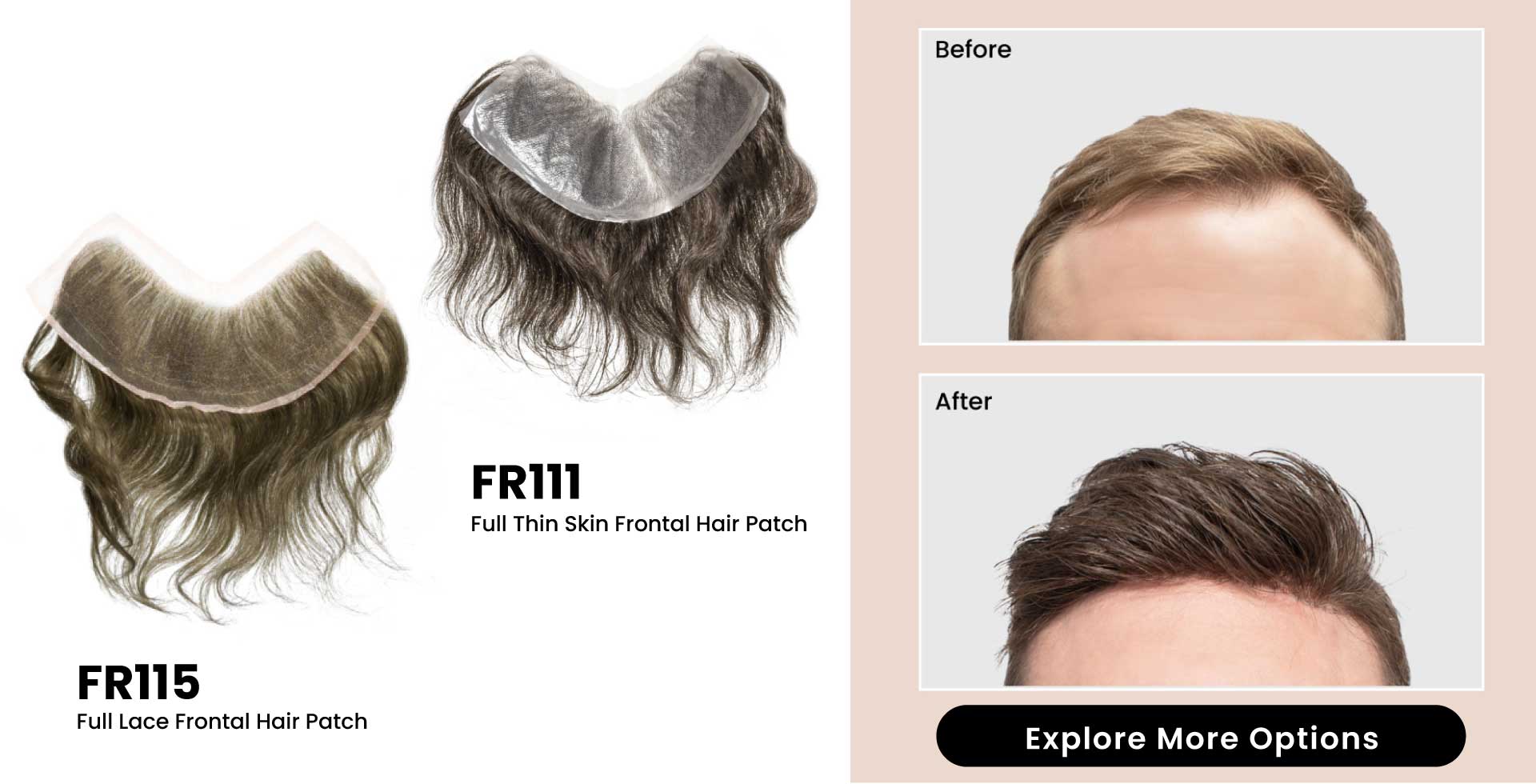
For clients with high temple recession, Matilda doesn't reach for a one-size-fits-all base.
If a client doesn't want to shave their hairline completely to match their temple recession for a toupee, Matilda says that they can get one of our frontal hair systems like the FR115 Full Lace Frontal Hair Patch or FR111 Full Thin Skin Frontal Hair Patch, which are built to cover the exact receding area rather than the whole scalp, so healthy hair around them stays untouched.
If the client has a challenging hairline, Superhairpieces can cut any frontal or stock unit into two pieces that blend seamlessly with the client's existing hair. Using a very thin skin or lace base can make the transition blend seamlessly, sit flush, and look like it's growing straight out of the scalp.
If the client does not prefer any of the above options, they can opt for a custom frontal hairpiece, which is available if the hairline shape needs to be built from scratch.
PRO TIP: A stock system trimmed to fit is often faster and cheaper than waiting on a fully custom order (that takes 3-5 months) and can still achieve the same seamless result when cut correctly.
Read More:
- Mature Hairline vs. Receding Hairline vs. Balding: Which Hair Loss Stage Are You At?
- Can I Get a Hair System for the Front Hairline Only?
Custom Hair System for Unusual Hairlines

Sometimes a thinning hairline is uniquely shaped, and Matilda says that's rarely a problem for those looking for an instant hair loss solution.
Read:
Working Around Scars, Bumps, and Ridges on Scalps
Scalp irregularities, whether from surgery, injury, or natural scalp contour, require patience above all else.
Once healing is complete, Matilda says that our stylists can apply the system smoothly over ridges and hollows, no matter how deep. For clients with no hair at all on the sides, a full-cap system provides complete, secure coverage.
Before any application, an allergy patch test is performed, usually during the consultation, so there's no need for a separate visit. A small amount of adhesive is applied behind the ear, and the client waits roughly 24 hours (or calls in to report back) before the team confirms whether a silicone-based or water-based adhesive is the better fit for their skin.
Read More:
- How to Do a Skin Patch Test at Home Before Applying Your Hair System
- Look Like Your Younger Self With These Full Cap Wigs For Bald Men
Sensitive Skin, Oily Scalps, and Excessive Sweating
Not every scalp reacts the same way to a bond, and Matilda adjusts her approach accordingly.
If the scalp still reacts, even to hypoallergenic products, Matilda moves to tape as the next option and clips as a last resort.
Read More: Sticky Situations: Best Hair System Adhesives for Sweaty, Sensitive Scalps
Read More: Scalp Prep: 7 Steps to Achieve the Best Bond With Your Hair System
Asymmetrical Hairlines: Matching the Client, Not a Rulebook
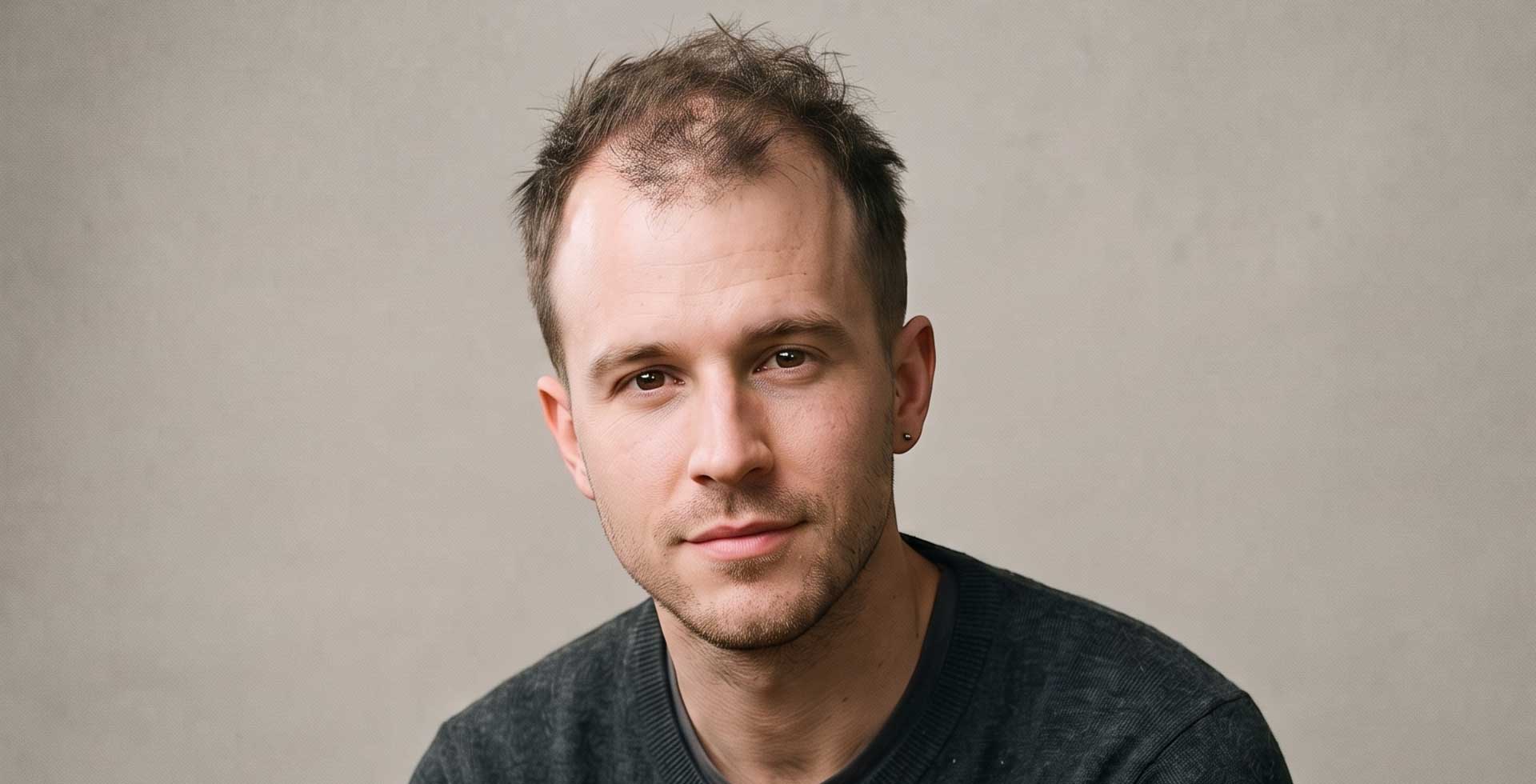
Few hairlines are uneven or asymmetrical, and Matilda says that our stylists don't try to force symmetry where there isn't any naturally.
The Four-Finger Rule for Placement
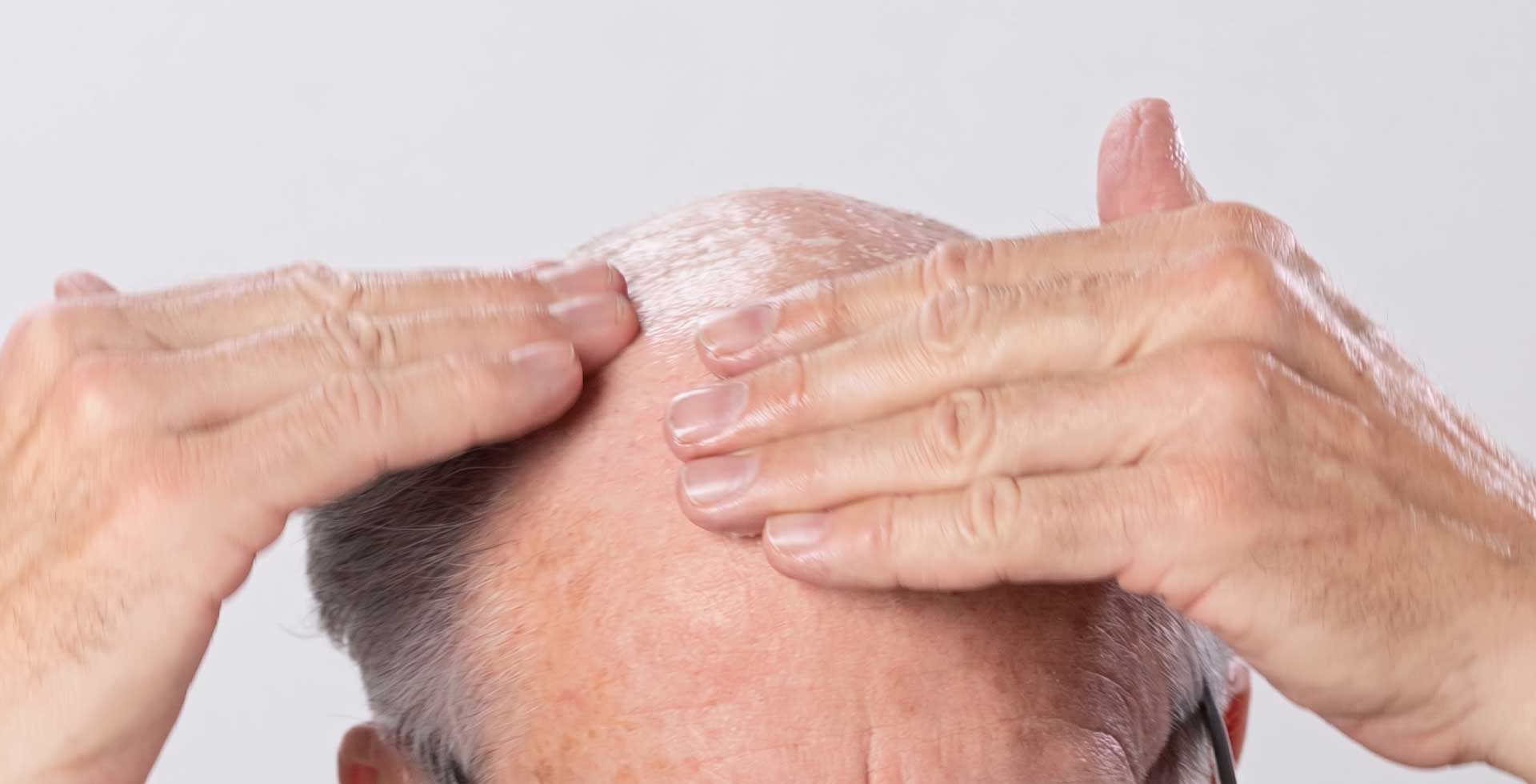
For clients with a larger forehead who are wondering where their hairline should actually sit, Matilda uses a simple, reliable measurement.
Matilda personally leans toward setting the hairline slightly higher rather than lower, since she finds it reads as more natural.
Even so, she stresses that the final call is the client's. She'll often test the position without any glue or tape first, so the client can see it and weigh in before anything is set.
PRO TIP: Use the four-finger rule as a starting point, then talk it through with your stylist until the position feels right to you, not just technically correct.
Read More: How To Measure Your Bald Spot For A Men’s Hair System
Cowlicks and Unusual Growth Patterns
Directional growth patterns and stubborn cowlicks are more common than people think, and most stock systems already account for them.
Read More:
Non-Shaving Techniques for Bio Hair or Transplanted Hair
Many clients want to avoid shaving their existing bio-hair altogether, including those with transplanted hair at the front. Matilda's go-to solution is a product called skin prep.
For fluffier hair, some stylists on the team use an alcohol-based bonding spray underneath the system instead to achieve the same flattening effect.
For clients with hair transplants who have only a few strands or "baby hair" at the front hairline, Matilda prefers not to shave that hair either.
If you are wondering, "Can I wear a hair system behind my hair transplant?" The answer is a definite YES!
For clients with very little growth on the sides or back, she leaves whatever hair is there and blends it with a thinner density on top rather than a heavy one, so the whole thing reads as natural rather than a hard line.
Read More: 5 Reasons Why a Hair System is Better than a Hair Transplant
@superhairpieces This application turned out PERFECT? #hairloss #hairtransformation #toupee #hairsystem #bald ♬ original sound - Superhairpieces
The Takeaway
An unusual hairline isn't a reason to rule out a hair system; it's a reason to work with a stylist who knows how to adapt. Between modified stock units, thoughtful adhesive choices, and simple measuring techniques like the four-finger rule, Matilda's approach proves that "unusual" just means a little more customization, not a limitation.
If you're unsure whether your hairline, scalp shape, or growth pattern can be accommodated, a free consultation with our experts is the easiest way to find out.

 Likes
Likes