GBP
GBP
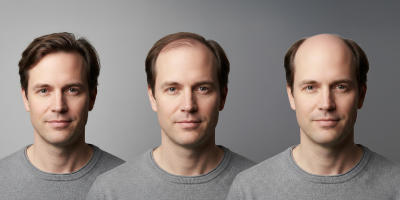
Mature Hairline vs. Receding Hairline vs. Balding: Which Hair Loss Stage Are You At?

If you've noticed your hairline shifting, changing in shape, or becoming more sparse and receding, you're not alone, and you're probably Googling one of the most-searched hair loss questions online: "Am I balding?"
This blog tells you exactly where you are in your hair loss journey and the non-surgical hair replacement options that are best suited to conceal it.
Human hair systems are changing how people deal with hair loss today, giving you more confidence and control over your appearance.
Mature Hairline vs. Receding Hairline vs. Balding: Which Hair Loss Stage Are You At?
Read on to find out which stage of hair loss you are at and where to find the best hair systems on the market.
What Is a Mature Hairline?

A mature hairline is a normal part of aging, not necessarily an alarming sign of male pattern baldness. Between the ages of 17 and 29, many men experience a slight shift or push back in their hairline, moving from their natural position to a more recessed shape. This natural transition typically involves a slight recession at the temples, usually no more than 1-1.5 cm above the highest forehead crease.
A mature hairline is NOT a sign of balding. It is merely a biological developmental shift, similar to the deepening of the voice during puberty.
Does this mature hairline recede further?
Essentially, if you do not have male pattern baldness in your genes, your hair regression will stabilize after this initial shift and will not progress further. The hair remains thick and healthy behind the new line, with no thinning at the crown.
Signs of a Mature Hairline:
- Slight symmetrical recession at both temples
- Hair density remains full and thick across the scalp
- The recession stops progressing after the initial adjustment
- No thinning at the crown or top of the head
- Usually occurs between ages 17–29
Causes of a Mature Hairline:
- Natural hormonal maturation during late teens and early 20s
- Testosterone converting to DHT at normal, healthy levels
- Genetic predisposition for adult hairline shape
What Is a Receding Hairline?
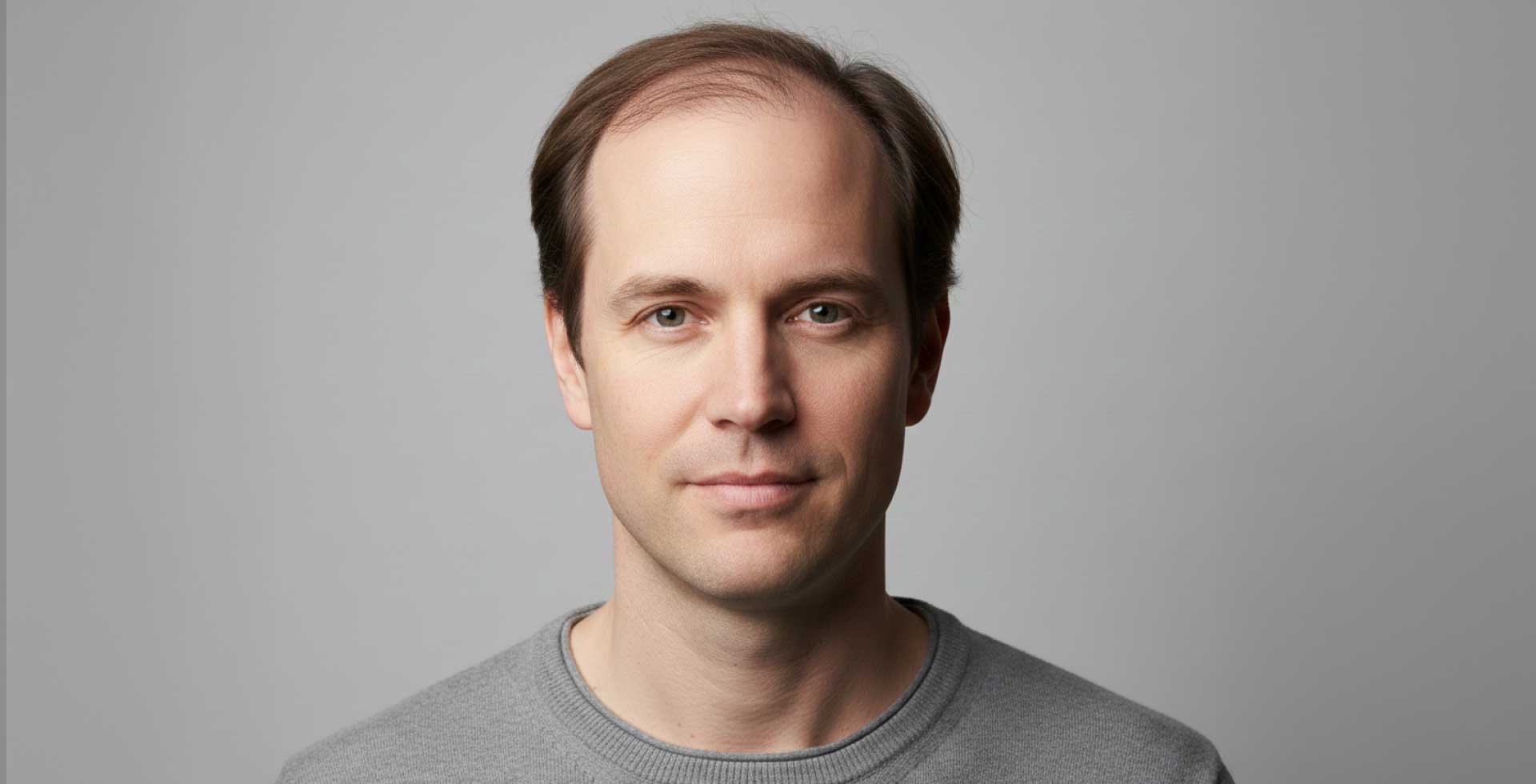
A receding hairline is often the first stage of androgenetic alopecia (male pattern baldness). It goes beyond natural maturation, progressing further back over time, often due to male- or female or pattern baldness, hormonal changes, stress, or nutritional deficiencies.
Unlike a mature hairline, a receding hairline doesn't stop on its own. It's classified using the Norwood Scale (for men) and the Ludwig Scale (for women), which charts the stages of hair loss from Stage 1 (minimal recession) to Stage 7 (extensive balding).
Signs of a Receding Hairline:
- The recession is deeper, with the hairline moving back more than 2 cm from the original position.
- Recession is uneven, creating an 'M', ‘U’ or 'V' shape as the temples recede faster than the centre.
- Noticeable thinning at the temples or crown.
- Hair feels finer or more fragile than before.
- Finding more hair than usual on pillows, in the shower drain, or in your brush
Causes of a Receding Hairline:
- Androgenetic alopecia (genetic sensitivity to DHT)
- Chronic stress (telogen effluvium, stress-induced shedding)
- Nutritional deficiencies (iron, zinc, biotin, vitamin D)
- Hormonal imbalances (thyroid issues, low testosterone, high DHT)
- Tight hairstyles cause traction alopecia
- Certain medications (blood thinners, antidepressants, steroids)
What Is Balding?
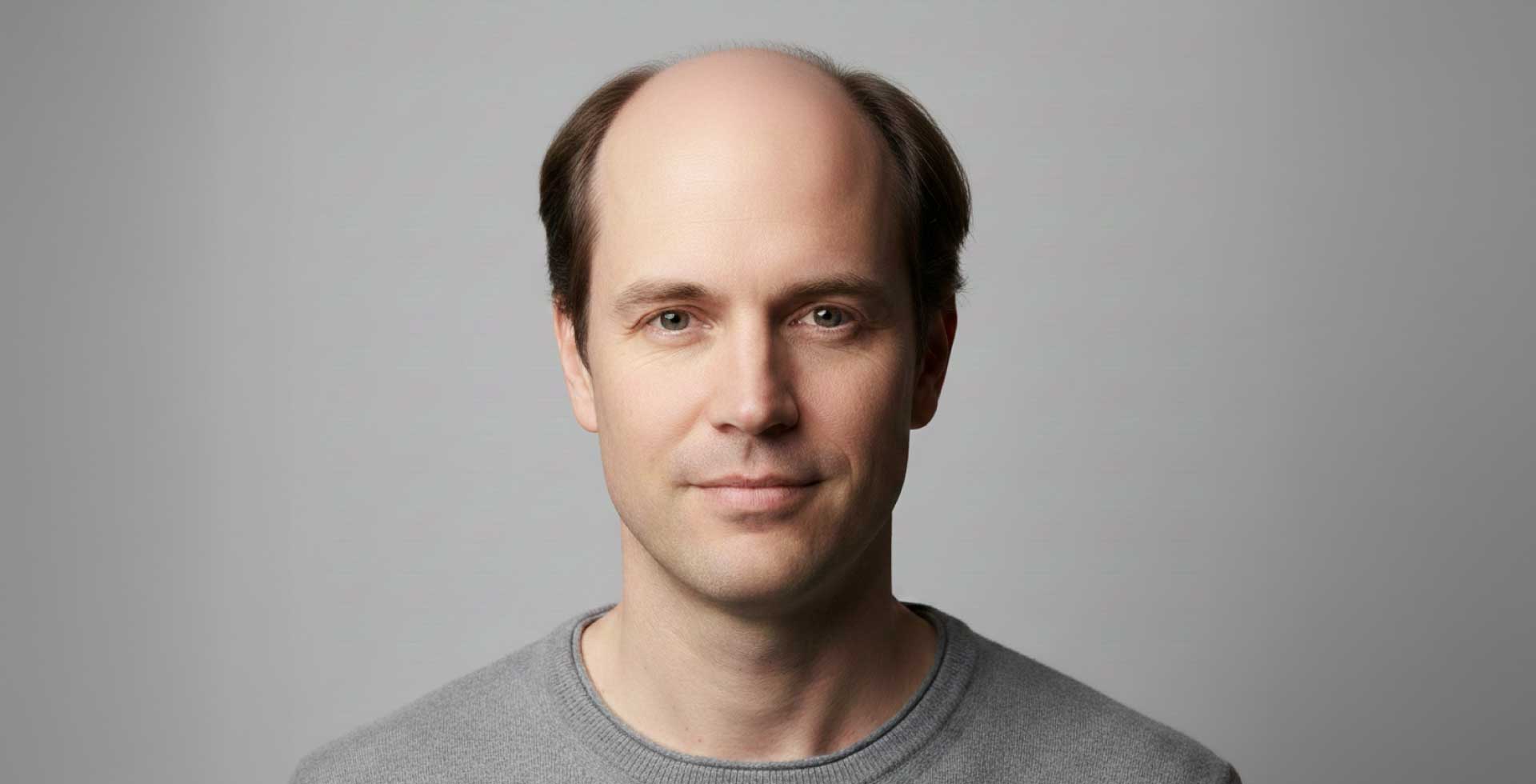
Balding is the advanced stage of a receding hairline, in which hair loss becomes more extensive across the scalp, especially in the crown area. Balding typically involves thinning or complete hair loss at the top of the scalp, or widespread thinning across the entire head. It is most commonly caused by androgenetic alopecia, a genetic and hormonal condition, but can also result from alopecia areata, telogen effluvium, thyroid disorders, and nutritional deficiencies.
Signs of Balding:
- Visible scalp through thinning hair at the crown or top
- Progression through multiple Norwood Scale stages from temple recession (Stage 3) to crown thinning and, eventually, merging into a large bald area (Stages 4–7).
- Significant daily shedding
Causes of Balding:
- Advanced androgenetic alopecia
- Alopecia areata (autoimmune condition)
- Scarring alopecia (permanent follicle destruction)
- Chemotherapy or radiation
- Severe nutritional deficiencies or chronic illness
How to Tell the Difference Between a Mature Hairline, a Receding Hairline, and Balding:
Distinguishing between a mature hairline, a receding hairline, and balding primarily depends on the rate of hairline change, the depth of recession, and whether hair density remains stable.
Here are a few things you can do to test your level of hair recession:
- The "Wrinkle Test": Raise your eyebrows; if your hairline is less than an inch above your highest crease, it is likely maturing.
- Density: If hair behind the hairline remains thick, it is likely maturing. If it is thinning or "miniaturized" (fine/thin), it is likely receding.
- Speed: A mature hairline stops moving, while a receding one keeps going.
- To track your own status, it is recommended to take photos every 3–6 months to monitor if the line is moving or if the density is changing.
| Question | Mature Hairline | Receding / Balding |
|---|---|---|
| Has your hairline changed in the last 2–3 years? | Slightly, then stopped | Yes, still moving back |
| Is the recession symmetric? | Yes, both temples are equally | Often asymmetric or uneven |
| Is your hair density the same overall? | Yes — full and thick | No — thinner in places |
| Are you losing more than 100 hairs/day? | No | Possibly yes |
| Is your crown thinning? | No | Yes |
| Are you in your teens or early 20s? | Likely mature hairline | See a dermatologist |
Mature Hairline vs. Receding Hairline vs. Balding: At a Glance
| Feature | Mature Hairline | Receding Hairline | Balding |
|---|---|---|---|
| Age of Onset | 17–29 | 20s–40s+ | 30s–60s+ |
| Progression | Stops naturally | Continues over time | Ongoing without treatment |
| Hair Density | Full and thick | Thinning at temples | Significant thinning |
| Crown Affected? | No | Sometimes | Yes (typically) |
| Symmetry | Usually symmetric | Can be asymmetric | Varies |
| Cause | Natural aging | Genetics, DHT, stress | Genetics, hormones, and health |
| Treatment Needed? | No | Optional/preventive | Yes, if desired |
| Norwood Stage | Stage 1–2 | Stage 2–4 | Stage 4–7 |
Understanding the Norwood Scale
The Norwood Scale is the gold standard for classifying male pattern baldness. It ranges from Type 1 (no visible recession) to Type 7 (only a horseshoe-shaped band of hair remaining on the sides and back).
| Norwood Stage | Description | Classification |
|---|---|---|
| Stage 1 | No significant recession, juvenile hairline | Normal / Juvenile |
| Stage 2 | Slight recession at temples, symmetric | Mature Hairline |
| Stage 2A | Slight recession across the front | Mature to Early Receding |
| Stage 3 | Deep temple recession | Receding Hairline |
| Stage 3 Vertex | Temple recession + beginning crown loss | Receding + Early Balding |
| Stage 4 | Significant temple and crown hair loss | Moderate Balding |
| Stage 5 | Band between temple and crown thinning | Advanced Balding |
| Stage 6 | Temple and crown patches merge | Severe Balding |
| Stage 7 | Only the horseshoe band of hair remains | Extensive Balding |
Treatment Options: What Actually Works
If you have a mature hairline, no treatment is needed. But if you're experiencing a receding hairline or early balding, here are all the clinically and practically supported options, from medication to modern hair systems.
FDA-Approved Medical Treatments:
- Minoxidil (Rogaine) — Topical or oral; stimulates hair follicle activity and slows loss. Most effective at earlier stages.
- Finasteride (Propecia) — Oral prescription DHT-blocker; clinically proven to slow and reverse male pattern hair loss.
- Dutasteride — More potent DHT blocker; used off-label in many countries.
Medical & Clinical Procedures:
- Hair transplant surgery (FUE or FUT) — Moves donor follicles from the back/sides of the scalp to thinning areas. Best for Norwood Stage 3–5.
- Platelet-Rich Plasma (PRP) therapy — Uses your own plasma to stimulate follicle growth.
- Low-Level Laser Therapy (LLLT) — FDA-cleared devices that use light to stimulate hair growth.
Lifestyle & Nutritional Support:
- Biotin, iron, zinc, and vitamin D supplementation (if deficient)
- Reducing chronic stress through sleep, exercise, and mindfulness
- Scalp massage (shown to increase thickness with consistent use)
- Avoiding tight hairstyles that cause traction alopecia
- DHT-blocking shampoos (ketoconazole-based) as a supportive measure
Non-Surgical Hair Replacement: Human Hair Systems
For men and women seeking an immediate, surgery-free solution to hair loss, hair systems are the most popular and instant options available today. Modern hair systems look nothing like the toupees of the past. Today's units are virtually undetectable, breathable, and customizable to match your exact hair color, texture, density, and hairline shape, to make you look more like yourself.
What Is a Hair System?
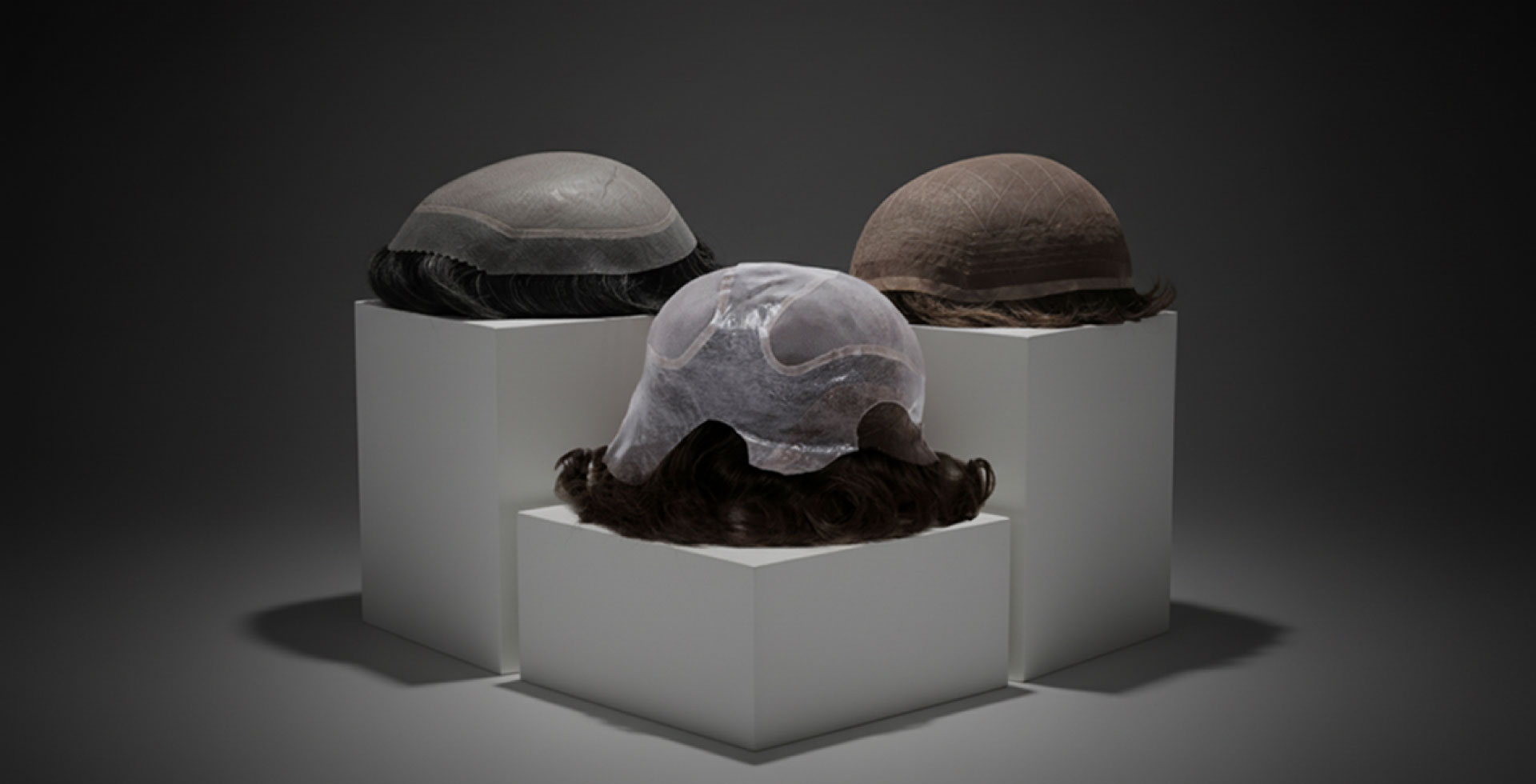
A hair system (also called a hair unit, hair topper, non-surgical hair replacement system, or hairpiece) is a custom or stock piece made with either real human hair or high-quality synthetic hair, attached to a base material that sits on the scalp. They are used by men and women across all stages of hair loss and are particularly effective for people who:
- They are not candidates for hair transplant surgery
- Want immediate results without waiting months for medication to work
- Have progressed beyond Stage 5–6 on the Norwood Scale
- Are experiencing hair loss from alopecia, chemotherapy, or scarring
- Simply prefer a non-surgical, non-pharmaceutical route
- Want a change in appearance
- Want to start using hair systems from the beginning of hair loss
Types of Hair Systems:
| Hair System Type | Base Material | Best For | Key Benefit |
|---|---|---|---|
| Lace Hair System | French or Swiss lace | Natural hairline, breathability | Most undetectable hairline |
| Skin / Poly Hair System | Thin polyurethane | Easy attachment, clean look | Very secure, easy to clean |
| Mono Hair System | Monofilament | Durability, natural part | Long-lasting wear |
| Hybrid Hair System | Lace + skin combo | All-day wear, active lifestyles | Best of both worlds |
| Hair Topper | Partial piece | Crown or top thinning only | Blends with existing hair |
| Full Cap Hair System | Full coverage | Stages 6–7 / total hair loss | Complete coverage |
Hair System Attachment Methods:
- Tape adhesive: Double-sided tape strips; easy to apply and remove
- Liquid adhesive/glue: Stronger hold; ideal for active lifestyles
- Clip-in attachment: No adhesive; great for beginners and occasional wear
- Integration method: Woven into existing hair for a semi-permanent look
Best Hair System Supplier: Why Superhairpieces Stands Out

If you're looking for the best place to buy a hair system, whether it's your first unit or you're a seasoned wearer, Superhairpieces is widely regarded as one of the top non-surgical hair replacement suppliers in North America and beyond.
Why Superhairpieces is the go-to choice:
- Offers both stock and fully custom hair systems for men and women
- Extensive selection of lace, skin, mono, and hybrid base types
- Uses 100% real Remy human hair for the most natural look and feel
- Competitive and transparent pricing, no hidden costs
- Ships internationally
- Provides detailed educational resources, tutorials, and how-to guides for first-time wearers
- Carries a full line of hair system accessories: adhesives, tapes, removal sprays, shampoos, and conditioners designed specifically for hair unit care
- Trusted by both individual buyers and professional hair salons and stylists
Whether you're dealing with a receding hairline at Stage 3, complete baldness at Stage 7, or hair loss from alopecia or chemotherapy, Superhairpieces has a system designed to restore not just your hair, but your confidence.
Comparing All Hair Loss Solutions Side by Side
| Solution | Best For | Time to Results | Cost Range | Permanence |
|---|---|---|---|---|
| Minoxidil | Early recession, thinning | 3–6 months | Low (ongoing) | Ongoing use required |
| Finasteride | Early–mid pattern baldness | 3–12 months | Low–moderate | Ongoing use required |
| PRP Therapy | Early thinning, maintenance | 3–6 months | Moderate–high | Repeat sessions needed |
| LLLT Device | Early–mid thinning | 4–6 months | Moderate (one-time) | Ongoing use |
| Hair Transplant (FUE) | Stage 3–5, stable loss | 12–18 months | Very high | Permanent |
| Superhairpieces Hair System | Any stage, budget-friendly | Immediate | Affordable | Replaceable units |
When Should You See a Doctor?
You should consult a dermatologist or trichologist if:
- Your hairline has been visibly receding for more than 6–12 months
- You're losing clumps of hair or noticing bald patches
- Your hair loss is sudden and dramatic (could be telogen effluvium)
- You're under 20 and already noticing significant hair loss
- Hair loss is accompanied by fatigue, weight changes, or skin issues
Frequently Asked Questions (FAQs)
Q: Can a receding hairline grow back?
A: Yes, in many cases, especially if caught early, you can grow back your hair. Minoxidil and finasteride have both been shown to regrow hair in men with early-stage androgenetic alopecia. Results vary by individual and how early treatment begins.
Q: At what age does a mature hairline develop?
A: Most men experience the transition from a juvenile to a mature hairline between ages 17 and 29. If your hairline shifts in this window and then stabilizes, it is almost certainly a mature hairline, not hair loss.
Q: How can I tell if my hairline is receding or just maturing?
A: The key indicator for hair loss is progression. A mature hairline shifts slightly and then stops. A receding hairline continues to move back over months or years. Track your hairline with photos every 3 months to monitor changes accurately.
Q: Does a widow's peak mean I'm going bald?
A: Not necessarily. A widow's peak is a natural genetic trait. However, if a widow's peak is new and progressively getting more pronounced, it could indicate a receding hairline worth monitoring.
Q: Is hair loss genetic?
A: Genetics is the primary factor in androgenetic alopecia, which accounts for 95% of hair loss in men. The gene can be inherited from either parent, not just your maternal grandfather, as the old myth suggests.
Q: What is the difference between male and female pattern baldness?
A: Male pattern baldness typically begins at the hairline and crown, classified by the Norwood Scale. Female pattern hair loss usually presents as diffuse thinning across the top of the scalp without a receding hairline, classified by the Ludwig Scale.
Q: Can stress cause a receding hairline?
A: Yes. Severe or chronic stress can trigger telogen effluvium, a condition in which large numbers of follicles enter the resting phase simultaneously, leading to noticeable shedding. This is typically temporary and reversible once the stressor is addressed.
Q: Is minoxidil or finasteride better for hair loss?
A: They work differently. Minoxidil stimulates blood flow to follicles (topical or oral). Finasteride blocks DHT production (prescription oral). Many doctors recommend combining both for maximum efficacy. Speak with a dermatologist before starting either.
Q: What Norwood stage is a mature hairline?
A: A mature hairline typically corresponds to Norwood Stage 2, a slight, symmetric recession at the temples that does not progress further. Stage 3 and beyond is where true pattern hair loss begins.
Q: Can I stop a receding hairline naturally?
A: You can slow progression with lifestyle changes like managing stress, improving nutrition, scalp massage, and avoiding damaging hair practices. However, if androgenetic alopecia is the cause, natural methods alone rarely stop it entirely. Clinical treatments are significantly more effective.
Q: What is a hair system, and is it the same as a toupee?
A: A hair system is the modern, professional term for what was once called a toupee or hairpiece. Today's hair systems are vastly more advanced, many made with real human hair, ultra-thin lace or skin bases, and custom-fitted to your scalp. They are virtually undetectable and used by men across all ages and stages of hair loss.
Q: How long does a hair system last?
A: It depends on the base material and how well it's maintained. Lace systems typically last 1-2 months with daily wear. With proper care and hair-system-specific products, you can significantly extend the lifespan of each unit.
Q: Where is the best place to buy a hair system?
A: Superhairpieces is one of the most trusted and reputable hair system suppliers available, offering a wide range of stock and custom units for men and women at competitive prices. They also provide extensive guidance for first-time buyers, making the process straightforward and approachable.
Q: Can you swim or exercise with a hair system?
A: Yes, you can, with the right adhesive. Liquid bond adhesives create a waterproof, sweat-resistant hold that handles swimming, gym workouts, and outdoor activities. Many hair system wearers live fully active lifestyles without any issues.
You may also be interested in:
Whether you're 18, noticing your first temple recession, or 45, looking for an immediate solution, there have never been more options available. From clinically proven medications to modern hair systems for men from trusted suppliers like Superhairpieces, reclaiming your hair and your confidence is more accessible than ever.