GBP
GBP

Hair System vs. Hair Transplant: Which Is Better in 2026?
Posted by Santana Fell on Jul 27, 2026
Male pattern baldness isn't just an older guy problem anymore, and it brings a lot of people to the same fork in the road: hair transplant or hair system?
It's 2026, and if you're reading this, you've probably already gone down the research rabbit hole. You've watched the YouTube testimonials, read hair system reviews, priced out clinics in Turkey, and maybe even scheduled a consultation or two.
We skip the fluff and break down the options so you can make an informed choice.
Should I get a hair transplant or a hair system?
Quick answer: A hair system gives you full coverage in as little as a few minutes, costs far less upfront and over time, and is non-invasive, so it carries zero surgical risk. A hair transplant can look natural and permanent for the right candidate, but it's expensive, slow (sometimes more than 6 months for results), and depends entirely on how much donor hair you have left. It is also not a permanent solution. For most people dealing with a receding hairline, crown balding, or alopecia, a hair system is the more accessible, reversible, customizable choice.
What Is a Hair Transplant?
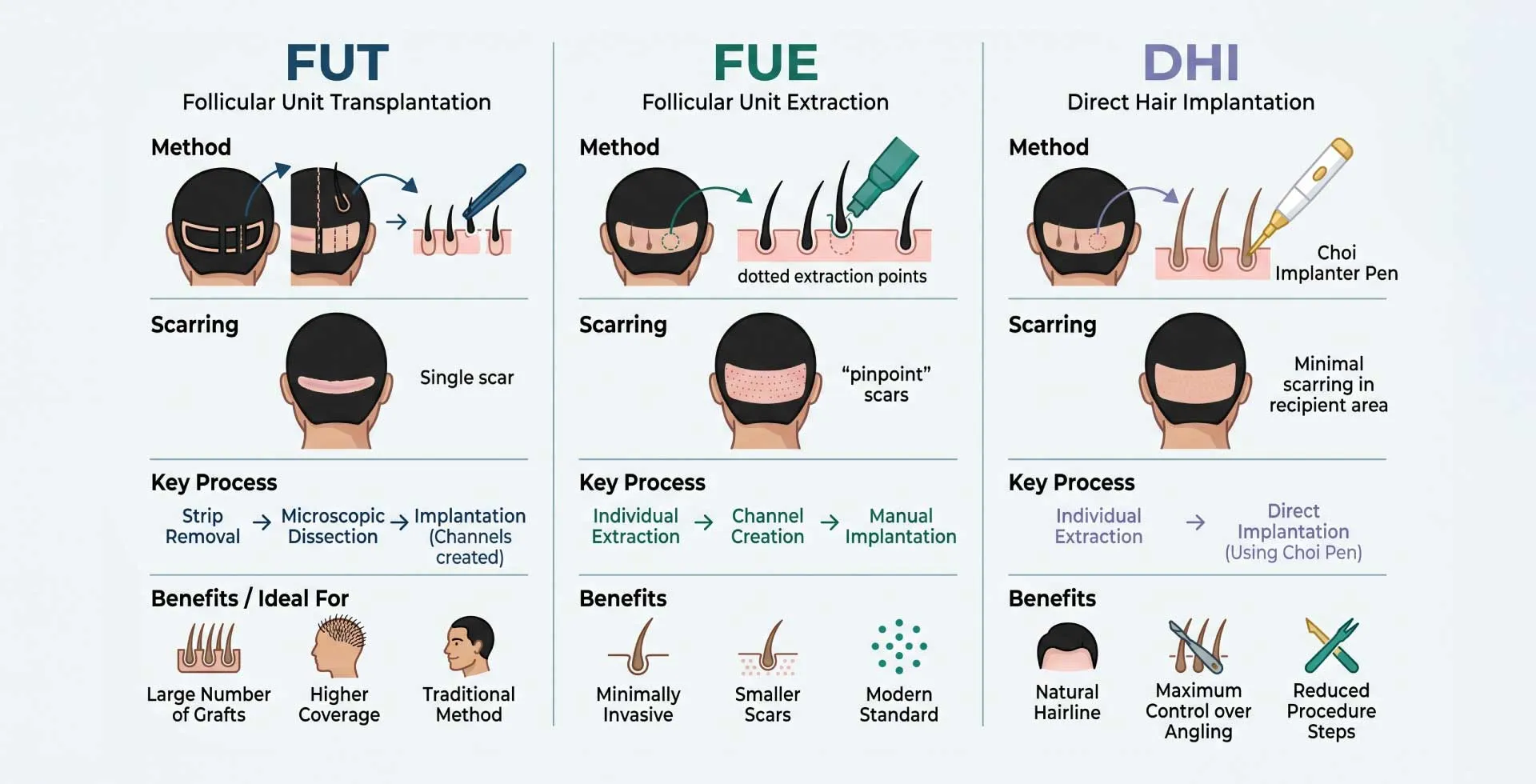
A surgical procedure where hair follicles are moved from a "donor area" (back/sides of the head where the person generally has healthy hair) to the balding or thinning areas of the scalp. Two main methods:
FUT (Follicular Unit Transplantation): a strip of scalp is removed and dissected into grafts (can leave a linear scar)
FUE (Follicular Unit Extraction): follicles are extracted one at a time (less scarring, more time/cost)
DHI (Direct Hair Implantation): a variation of FUE where follicles are implanted directly without creating incisions first
Turkey has become the global hotspot for hair transplants. Procedures costing $8,000–$20,000+ in the U.S. often run $2,000–$5,000 there, bundled with hotel and airport transfers. Affordable, yes, but is affordable always worth it?
Read: Should You Get a Hair Transplant in Turkey?
What Is a Hair System?
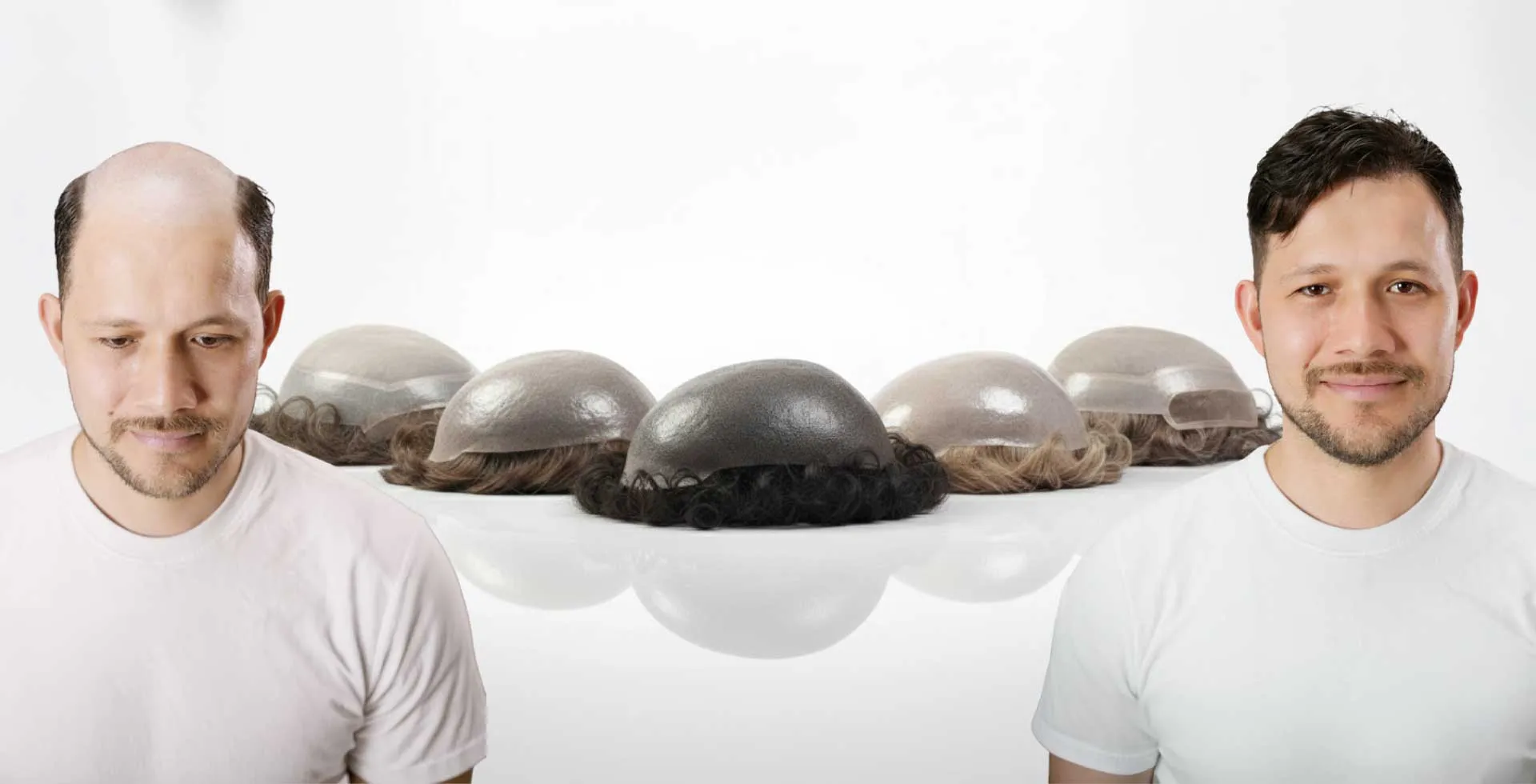
Hair systems, also called hairpieces, toupees, or non-surgical hair replacement, are available in custom or stock units that are made from human or synthetic hair on a thin, natural-looking base (lace, skin, monofilament, or hybrid), giving you a realistic look. No surgery, no incisions, no waiting for hair growth. You can live your everyday life normally. Because it doesn't rely on your own hair, it works even for advanced baldness or alopecia where a transplant isn't an option.
8 Reasons a Hair System Beats a Hair Transplant
Instant results: full coverage on the same day
Lower upfront cost: Hair systems run $200–$500+ per unit that can last you up to a few months.
Zero surgical risk: no bleeding, scarring, infection, or weeks of recovery.
Customizable density: a transplant is capped by your donor supply; a hair system's density is fully customizable.
Total style freedom: change length, color, curl, straight, or wavy hair pattern or hairline anytime. A transplant locks you into whatever grows in.
Fully reversible: stop using or change the system anytime. Transplant scars and hairline shape are permanent.
Solves the whole problem: hair loss continues in untreated areas after a transplant, sometimes needing more surgery or lifelong medication. A hair system sidesteps this entirely.
No visible recovery: no redness, scabbing, or shaved-scalp look to hide from coworkers.
Comparison
Feature | Hair Transplant | Superhairpieces Hair System |
Result Time | 6–12 months | Instant |
Density | Limited by donor supply | Fully customizable to your liking |
Invasiveness | Surgical/Invasive, prone to pain/scar. Results not guaranteed. | Non-invasive, no pain/scar. Get the exact look you want instantly. |
Upfront Cost | $2,000–$5,000+ | $200–$500+ |
Ongoing Cost | Possible repeat surgery | Predictable maintenance |
Reversibility | Permanent (scars remain) | Fully reversible |
Advanced hair loss coverage | Limited by donor hair | Full coverage possible |
Styling versatility | Limited by hair density and hairstyles that cover hair transplant scars | Full styling freedom. Choose your density, hair texture, color, and style |
"But Isn't a Transplant More Permanent?"
Permanent doesn't mean finished. Hair loss is progressive. Untransplanted hair keeps thinning. A hair system, by contrast, offers coverage for shedding or regression.
Cost & Maintenance Reality Check
Transplant: Expect a few weeks of swelling, scabbing, and shedding initially. After that, maintenance is generally low, mostly routine hair care, with some people choosing to use medications like minoxidil or finasteride to help preserve existing hair. Over the long term, a hair transplant can be more cost-effective than a hair system. However, if hair loss continues (as in most cases of male pattern baldness), additional transplant sessions may be needed, which can narrow the overall cost difference.
Hair system: There's no surgical downtime, but ongoing maintenance is required. Expect cleaning every 1–2 weeks, reattachment every 2–4 weeks, and replacing the unit approximately every 3–4 months, depending on wear and care. Modern systems generally hold up well during exercise and swimming, but they're not a "set it and forget it" solution. Stock units are available quickly, while custom units typically take around 3–4 months to manufacture.
Common hesitations with hair systems and how to get past them
No time for a custom fit? Stock units can be adjusted on the spot, with rush options available.
Is budget tight? Superhairpieces’ flexible subscription plans spread cost out instead of one lump sum. Learn to do maintenance and installation yourself; it will save salon visit costs.
Far from a location? Virtual consultations cover much of the process, and Superhairpieces salon-prepared hair systems are ready to wear right out of the box. No salon visit needed for installation or haircut.
Didn't like your first unit? A reputed company like Superhairpieces has your back. Call us or book a FREE consultation, and we can help you choose the right system for your lifestyle.
Not enough growth on the sides? Ideally, we ask you to wait for some growth so we can determine a proper color and density match, but if you don’t want to wait, you can opt for customizable stock options instead.
Don’t want to shave your head? No problem, we work around your choices.
Read: Unusual Hairline? Here's How Our Stylist Handles It
Who Should Choose What
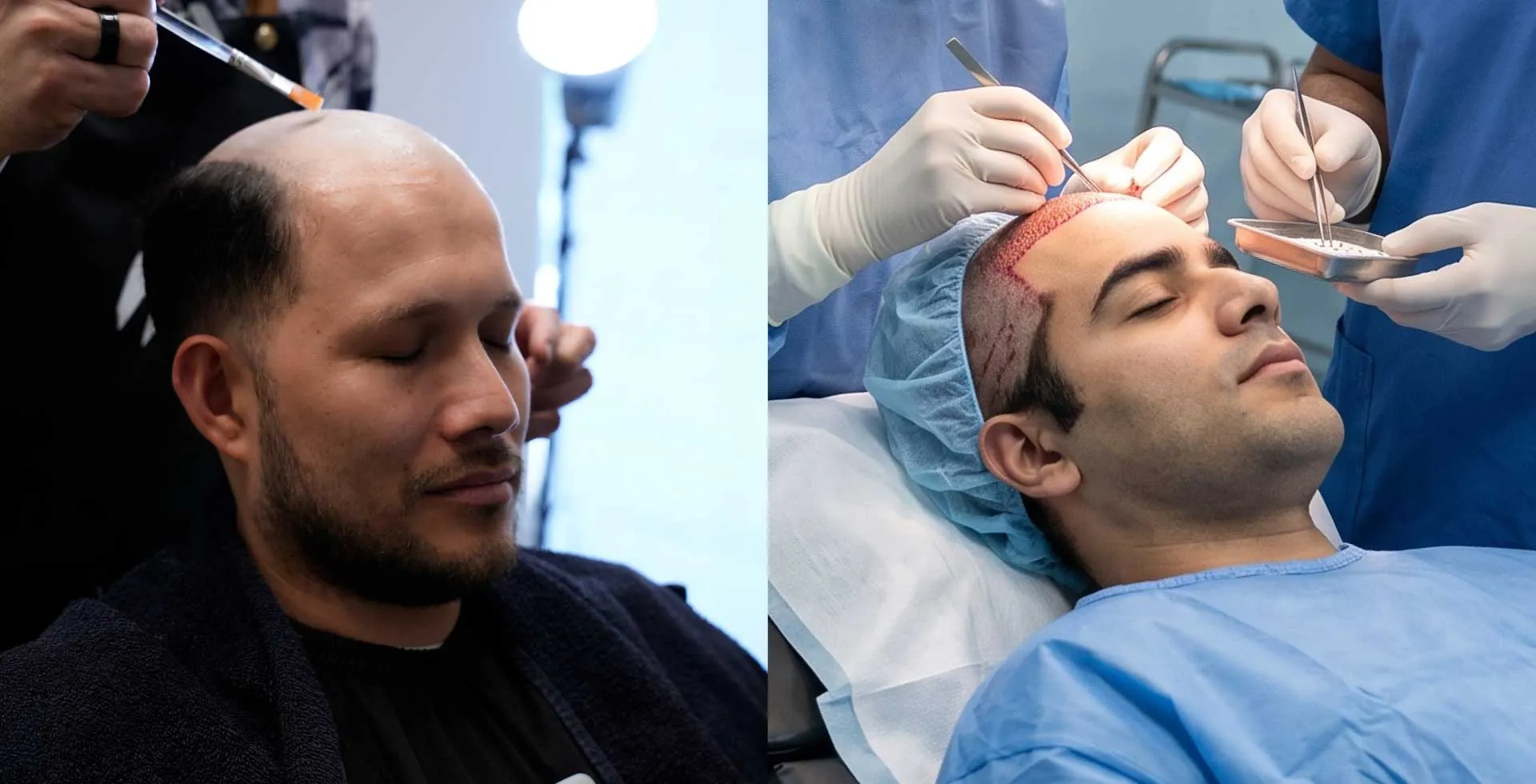
Choose a hair transplant if:
You want a permanent, biological regrowth solution
You have enough healthy donor hair on the sides and back
You can absorb the high upfront cost in one go
You'd rather deal with weeks of recovery now for low maintenance later
Choose a hair system if:
You want instant coverage, not a months-long wait
You'd rather avoid surgery altogether
You want the flexibility to change style, density, or color over time
You have limited or no donor hair to work with
You'd prefer to spread cost out over time rather than pay a large sum upfront
Can I use a hair system with my hair transplant?
Some people combine both: a transplant for permanent density in some areas, a hair system to fill in where donor hair can't stretch.
Some people resort to hair systems when they start losing more hair past their transplanted area. They try to keep their transplanted hairline and use a hair system behind it.
If you are wondering, "Can I wear a hair system behind my hair transplant hairline?" The answer is a definite YES!
For those with transplanted hair at the front, Matilda, Superhairpieces’ expert stylist, says, “For clients with hair transplants who have only a few strands or 'baby hair' at the front hairline, Matilda prefers not to shave that hair. "It looks so much more natural, like it's growing out of the skull. I just start the system right behind it and blend over it. The density you choose for the unit makes a big difference in how well that blend works."
For clients with very little growth on the sides or back, she leaves whatever hair is there and blends it with a thinner or light density hair system on top rather than a heavy one, so the whole thing reads as natural rather than a hard line.
In such cases, clients can even opt for a more durable hair system, saving them money in the long run.
FAQs
Is a hair system better than a transplant?
For most people, yes. It is instant, reversible, customizable, with no surgical risk and a lower upfront cost.
Is a transplant permanent?
Transplanted hair usually stays, but surrounding natural hair can keep thinning over time, leaving one with patchy hair loss.
Can a hair system look natural?
Yes, high-quality hair systems are virtually undetectable, even up close.
What if a stock hair system doesn't fit my hair loss pattern?
Stock units can often be customized to better match your needs. In the meantime, custom units built specifically to your hairline, density, and color are also available for a more precise, long-term fit.
Ready to see what a hair system could look like on you? A FREE consultation, in person or over video, can show you real options in minutes, not months.

 Likes
Likes