USD
USD
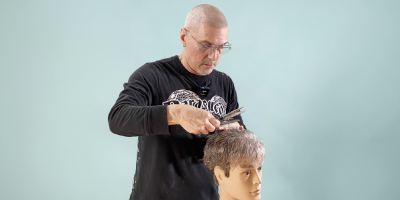
A Hair System Stylist Who Wears a Toupee: The Insider Truth Every Man Needs to Hear
Posted by Santana Fell on Mar 17, 2026
Every day, men facing hair loss find themselves in front of non-surgical hair replacement experts, filled with questions about hair systems. However, many of them miss out on the most crucial ones. They nod in agreement, leave the appointment, and either second-guess themselves into inaction or end up with the wrong product, blaming the industry for their dissatisfaction.
When searching for hair systems, most men seek one thing- the unvarnished truth. Not the sales pitch, the real deal. That’s precisely what Omar offers.
We got our hair system specialist to answer the real questions; the kind that balding men type into ChatGPT at 2 am. No fluff. No upselling. Just a real user experience account of what he actually learned from 8 years of wearing a hair system and applying it to hundreds of clients.
This blog is for all those hair system wearers, new or pro. There is always something you can learn from an expert fellow hairpiece user.
Hair System Stylist Reveals What Brands Won't Tell You
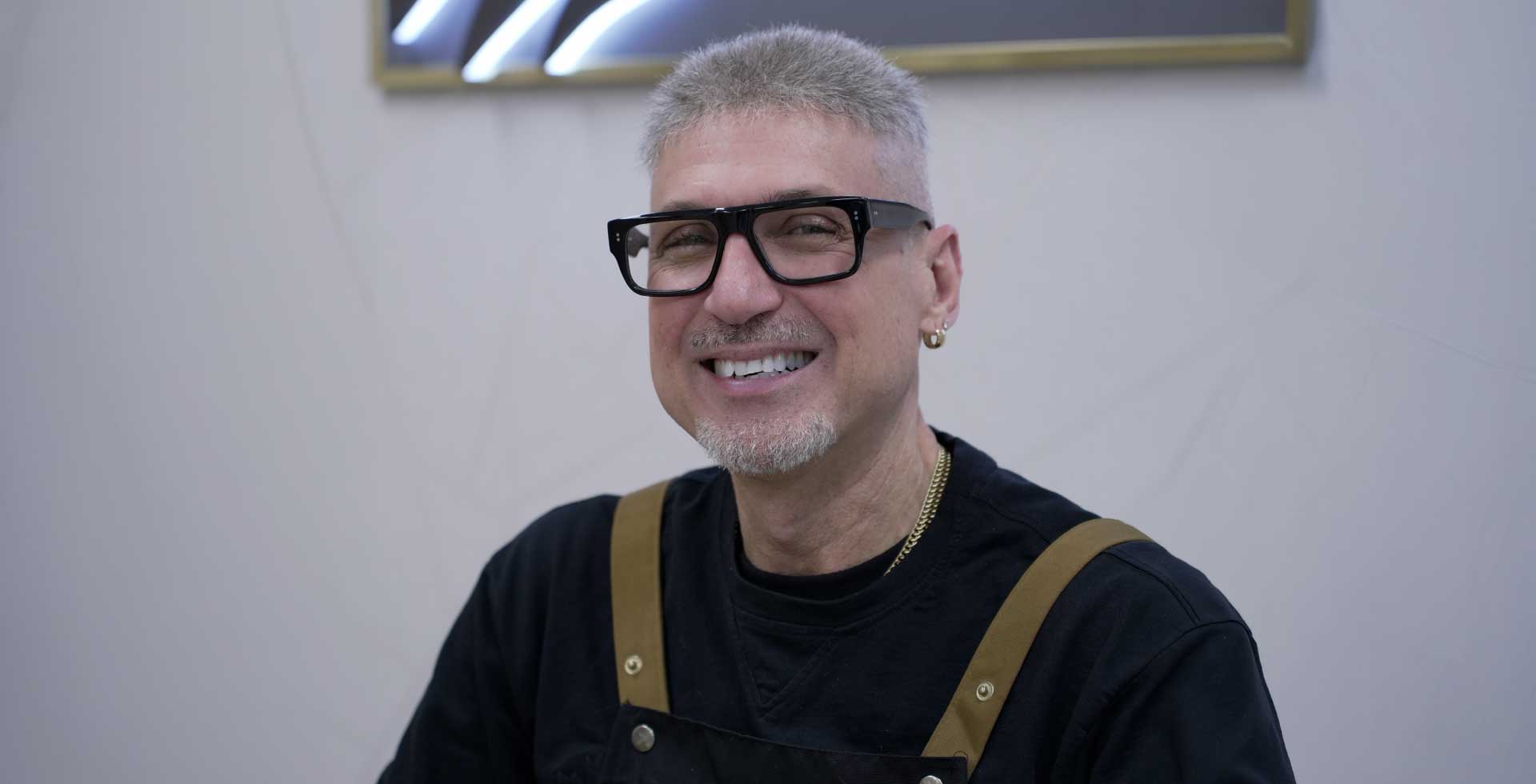
Meet Omar Carrazana, a seasoned hairdresser with 4 decades of experience and a skilled hair-system stylist who rocks a toupee.
He wears a men’s hair system, not because he has to, but because he wants to.
What you're about to read isn't a sales pitch. It's the unfiltered truth about living with a hair system from someone who applies them to clients, researches them obsessively, and wakes up most mornings and wears one.
In this interview, Omar shares what the brochures leave out, the mistakes he has watched hundreds of men make, and the pro tips that make wearing a hair system a success.
This guide covers everything from choosing your first hair system to advanced maintenance tips, adhesive comparisons, and how to live an active lifestyle while wearing a men’s hairpiece.
Who Is This Guide For?
This guide is for:
- Men considering non-surgical hair replacement for the first time
- Current hair system wearers who are struggling with maintenance, adhesive, or longevity issues
- Anyone asking: "Does a hair system look natural?" or "Can I work out with a hair system?"
- People comparing thin skin vs lace base systems
- Men with active lifestyles who want to know if a hair system can keep up
Excerpts from the interview with Omar Carrazana
This interview is a first-person account filled with hair system insider tips from Omar, a hair replacement specialist & hair system wearer.
1. Which Hair System Are You Wearing Currently?
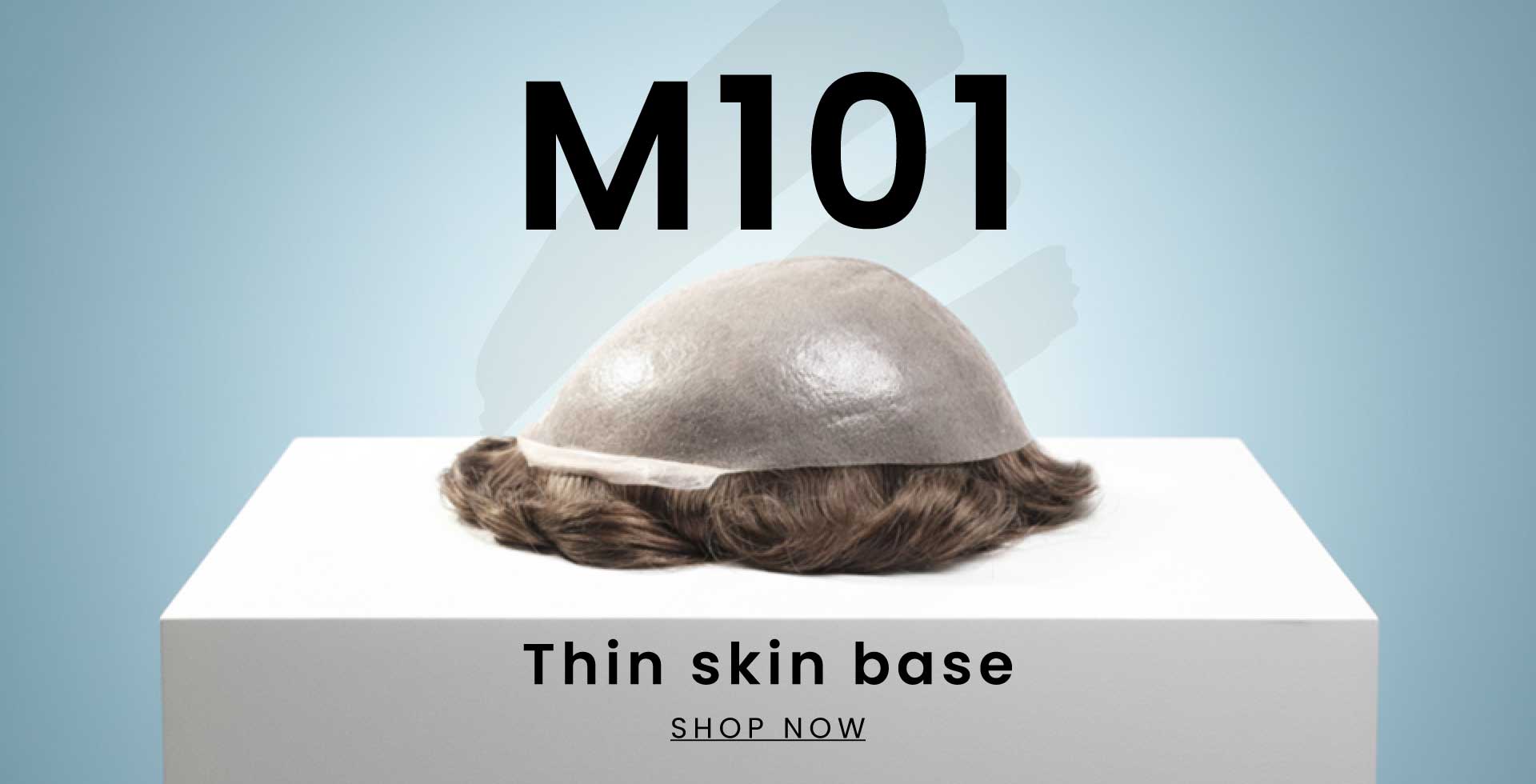
I wear the M101 thin skin base system. I've never switched and never needed to. I'm 61, I go to the gym regularly, I sometimes wear my system and sometimes don't, and 97% of people have no idea.
2. How Long Does a Hair System Last? Real Numbers from a Real Wearer
I work out regularly. I don't sweat heavily. My M101 thin-skin hair system lasts 3 to 4 months with weekly removal and reapplication, careful maintenance, and keeping my hair short. I trim the front when it keeps losing hair. (Note: Thin-skin bases are generally disposable and last 1-2 months)
The average client who comes in every 2–4 weeks for professional maintenance can expect 2–3 months with a thin-skin system, depending on their lifestyle.
Thin skin system lifespan (real numbers):
- Light activity, once-weekly removal: 3–4 months
- Heavy sweating, daily gym use: 6–8 weeks with proper maintenance
- With the sandwich adhesive method (tape + glue), the hair system's lifespan is maximized even for active users
PRO TIP for hair system users with active lifestyles: Thin skin with Ghost Bond Platinum adhesive applied only to the perimeter (no adhesive on the scalp) can hold through workouts. I've tested it personally; it doesn't move.
Read: How long does a Superhairpieces hair system last?
3. What are the Factors That Extend or Shorten the Lifespan of a Hair System?
Here are some PRO TIPS to extend the lifespan of your men’s hair system:
Shortens the lifespan of a man’s hair system:
- Shampooing too often: the single biggest mistake. Over-shampooing strips moisture and weakens hair fiber bonds.
- Leaving the system on too long without a service: Adhesive decomposes and becomes sticky/gooey, pulling hair
- Pulling off tape without using alcohol properly (on both sides of the base for lace units): Tears hair directly from the base
- Going to a barber unfamiliar with hair systems
Extends the lifespan of a hair system for men:
- Wash once a week, maximum: Preserves hair fiber integrity
- Using leave-in conditioner consistently: Replaces moisture lost through no-cuticle processing
- Rinsing with only water after sweating instead of shampooing: Removes salt without stripping moisture
- Using isopropyl alcohol correctly during removal: Zero hair loss during maintenance
- Keeping hair shorter: Less tangling, less stress on the system
4. Thin Skin vs Lace Base Hair Systems: Which is Better for a natural look? The Honest Comparison
This is the question I get asked most. And I'll give you the same answer every time. If you ask me personally, thin skin wins 100% of the time. Here's why.
Why I Choose Thin Skin (Every Time)
- Natural Look: Looks the most natural of any base type
- Easy Application: Fastest and easiest to apply, even solo at home
- Easy cleaning: Easy to clean with simple tools (credit card edge, cotton, isopropyl alcohol)
- Undetectable Appearance: Vlooped hair so no knots are visible through the base, unlike lace
- Comfort: Flat against the scalp, no step-up effect when attached correctly
- Versatility: Short hair works especially well with it. “I sport a kind of buzz cut or military cut with it, too, with no hair on the sides.”
Disadvantages:
- Less breathable than lace (though this is rarely a real-world problem)
- Thinner bases can be more delicate if mishandled
When Lace Makes Sense
Lace, specifically Swiss lace with single bleached knots, can look absolutely incredible, especially for lighter hair colors. The knots become almost invisible. But lace is more delicate and more demanding to maintain, and you have to be very careful not to scratch it, as scratching can loosen knots or stretch the lace.
Disadvantages:
- Delicate
- Tape removal must be done carefully
- Darker hair colors show knots more obviously
Verdict: For most men, especially beginners, thin skin wins.
Thin Skin Hair Systems: Best for beginners wanting a natural look, active men, men who want a low-maintenance application, and short hairstyles
Lace Hair Systems (Swiss Lace / French Lace): Best for men who want maximum breathability, men with lighter hair colors, and men who want the most invisible hairline
5. What are the Biggest Mistakes Men Make When Choosing Their First Hair System?
The 4 Biggest Mistakes Men Make When Choosing a Hair System:
Mistake #1: Prioritizing Durability Over Natural Look
New clients come in and say, "I want something that lasts a long time."
That's the #1 error. They choose long-lasting monofilament or high-density systems. Then they style their hair back, and it looks obviously fake.
Why this happens: Men with hair loss typically have very low density on the sides. A system with 120–135% density on top creates an extreme contrast that no fade haircut can fix. The hair won't blend. Period. You need a system that matches your remaining hair density, not one built like a helmet.
PRO TIP for newcomers: Don't start with a heavy-duty system because you're afraid of commitment. Try a thin skin first. The learning curve is almost zero.
Mistake #2: Choosing the Wrong Density
A system that's too dense will never blend properly, no matter how skilled your barber is. Density that's too high will always look unnatural. Density that's too low can look thin and wispy. Get a professional consultation before ordering so you can buy a toupee that best suits your individual needs.
“Match your system density to your remaining bio hair. Most men need 80–90% density. A system that looks natural at 90% density is worth ten times more than a 130% system that lasts 6 months but looks fake.”
Mistake #3: Hairline Placed Too Far Back
Hairline placement is everything. If a stylist places the system even a centimeter too far back, the result looks like advanced hair recession rather than a full head of hair. This is a technical skill; choose your non-surgical hair replacement stylist carefully.
Mistake #4: Wrong Hair Color Match
Lighter hair colors are more forgiving, the knots are nearly invisible, and bases blend easily. Black or very dark hair shows every knot and every base imperfection. If you have dark hair, invest in:
- Single bleached knots
- A high-quality Swiss lace base (for lace systems)
- Professional color matching by a hair system professional, not from a color chart
Additional Beginner Mistakes:
- Choosing the wrong base
- Neglecting their regular maintenance schedule
- Trusting the wrong seller
- Buying cheap online without consultation
PRO TIP: Book a consultation with Superhairpieces, and we can guide you through every step, from hair density to the right color and base, so that you can love your new look with a hairpiece.
6. Tape vs Glue — What Adhesive Actually Works?
Every person's body chemistry is different. What bonds perfectly for one person lifts in two days for another. Always test adhesives before committing.
For Heavy Sweaters and Active Men
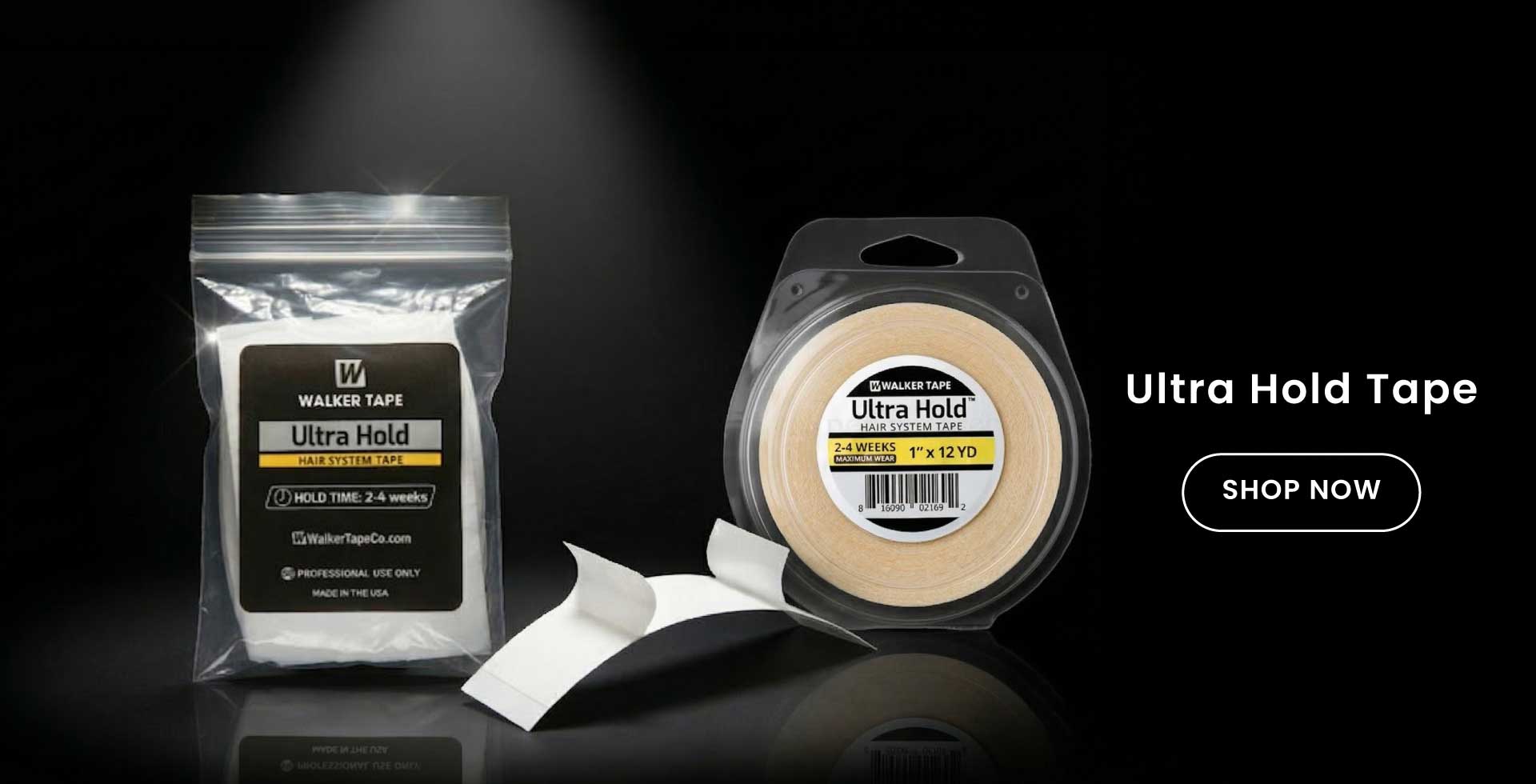
Ultra Hold Tape is the strongest tape on the market. But to really lock in a system for an active lifestyle, you need what I call the sandwich method:
- Apply tape on the system perimeter
- Put a thin layer of liquid adhesive (ultra hold) on top of the tape
- Apply some liquid adhesive to the scalp as well
- Wait for the bond to get tacky, then place the system down and press it in place.
That's how you get a bond that won't give up on you.
Omar’s Low-Maintenance Method:
Read: Tape Vs Glue: Which One Is Better For Your Hair System
Adhesive Comparison
| Adhesive Type | Best For | Hold Strength | Notes |
|---|---|---|---|
| Ghost Bond Platinum | Most wearers with oily scalps | Strong | Goes transparent when ready; clean removal |
| Ultra Hold Tape | Heavy sweaters, very active men | Very strong | Strongest tape available; some find it irritating |
| C-22 Solvent | Cleaning residue only | N/A | Not an adhesive — use for removal and cleaning |
| Daily Wear Tape | Men who remove nightly | Light | Easiest removal; won't hold more than 1–2 days |
| Ultra Hold Liquid | Extended wear needs | Very strong | Goes gooey over time; needs careful application |
Tape vs Glue for Itching - Which One Should You Use?
Read: 7 reasons your wig or toupee is itchy and how to fix it
PRO TIP: If you're experiencing itching under your system, switch from tape to a liquid adhesive like Ghost Bond Platinum. And if it does itch, tap, don't scratch. Scratching a lace system loosens the knots, leading to hair fall. Gently tapping the itchy part relieves the itch.
7. How to Remove Hair System Tape the Right Way?
The Correct Hair System Tape Removal Technique
For lace systems:
- Part the hair aside to expose the lace edge near the tape
- Spray isopropyl alcohol (70–90%) onto the lace surface, between the hair and the tape
- Let the alcohol travel through the lace and reach the adhesive bond underneath
- Wait 10–15 seconds, then gently pull the tape away from the lace with zero tension
- If you feel any resistance, stop and apply more alcohol; never force it
- Forcing the tape rips the hair directly from the base
For skin systems:
- Apply C-22 solvent or isopropyl alcohol to the edge of the skin base
- Slowly peel the skin away from the scalp. The skin base is more resilient than lace
- Lay the system base-up on a clean surface
- Use a credit card edge or similar tool to roll off adhesive residue gently
- Finish with cotton pads in circular motions to pick up any remaining residue
8. Can We Swim, Run, or Work Out With a Hair System?
Yes, you can go to the gym, swim, run, and lead an active lifestyle with a hair system.
Here's how to do it right:
- Use the sandwich method (tape + liquid adhesive) for maximum hold
- After working out, rinse with water; don't shampoo. Sweat is mostly water and salt; rinsing removes the salt without damaging the system.
- Apply a small amount of leave-in conditioner after every rinse
- Shampoo once a week at most, even if you train daily, unless you use heavy styling products.
How often should active men get hair system maintenance?
- Moderate activity (3–4 workouts/week, low sweat): every 2–4 weeks
- High activity (daily training, heavy sweating): every 2 weeks, or weekly self-maintenance at home
Swimming with a Hair System
You can swim with a hair system. However, do so with caution. Chlorine is the main risk; it dries hair fiber and can turn lighter hair colors slightly green (chlorine crystals are blue; they react with golden or blonde tones).
Read: Everything You Need To Know About Swimming With A Hair System
Protocol for swimmers:
- Apply Ghost Bond Platinum in two coats around the perimeter 24-48 hours before swimming
- Rinse hair immediately after exiting the pool
- Apply leave-in conditioner while still damp
- After swimming in the pool or ocean, avoid shampooing unless absolutely necessary; rinsing is enough
Running and Sweat
Salt from sweat is a natural drying agent. It won't destroy adhesive instantly, but heavy cumulative salt exposure weakens the bond over time.
PRO TIP:
- The old advice to shampoo daily was common in some studios, but it was intended to shorten the system's lifespan so you'd buy a new one sooner. Rinse instead. Your system will last significantly longer.
- Chlorine or salt in sweat will dry hair quickly. Always use a leave-in conditioner to protect your hair from damage.
9. What to Do When the Front Hairline Lifts?
Quick At-Home Hairline Fix
- Press the lifted section down firmly.
- Lightly spray isopropyl alcohol onto the hairline; a little goes a long way.
- Slowly lift the lace or skin edge away from the scalp; you want the tape to stay on your head.
- Fold the system base back away from the hairline
- Blow-dry the base on low heat until completely dry
- Use dry cotton in circular motions on the base to remove old adhesive
- Clean the scalp hairline with alcohol, let it dry completely
- Apply skin prep spray or wipe to the scalp. This is different from a scalp protector; it improves the bond strength
- Apply fresh tape to the base
- Add a thin layer of Ghost Bond Platinum on top of the tape
- Wait until the Ghost Bond goes tacky and fully transparent
- Press down firmly
- Done
10. Which are the Products Every Hair System Owner Should Have?
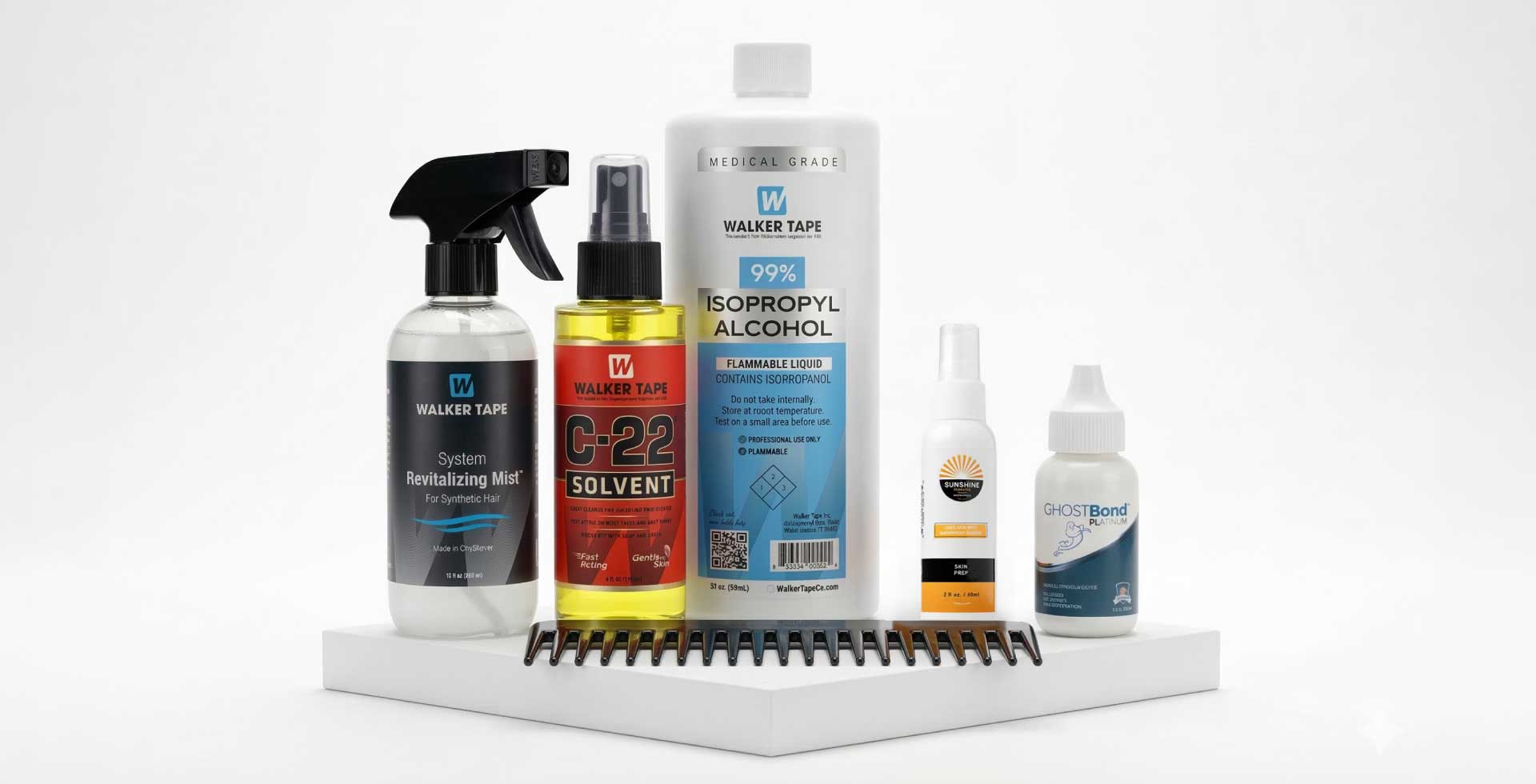
- Must-Have #1 — Leave-in detangling conditioner: Equave Two Phase by Revlon is my personal favorite (it smells incredible). The Walker Tape System Revitalizing Mist Leave-In Conditioner also works beautifully on human hair systems.
- Must-Have #2 — Isopropyl alcohol (70–90%): Your primary cleaning and removal tool. Evaporates cleanly, no oily residue.
- Must-Have #3 — Ghost Bond Platinum adhesive: Best all-around hold for skin systems, especially on oily or active scalps.
- Must-Have #4 — Skin prep spray or wipes: Applied before adhesive, they prime the base and dramatically improve bond strength.
- Must-Have #5 — C-22 solvent: For deep cleaning adhesive from the base, not for live removal. Soak the base for 1–2 minutes, then clean with cotton.
- Must-Have #6 — Ultra hold tape: The strongest tape for heavy sweaters and active lifestyles.
- Must-Have #7 — Wide-tooth comb and soft bristle brush: For daily styling without stressing the hair fibers.
PRO TIP:
- C-22 is the best solvent for deep cleaning, but it's very oily. Don't use it for live tape removal; the oil makes everything slippery and unmanageable. Remove the tape first with alcohol, then soak the base in C-22 for 1–2 minutes, then clean with dry cotton in circular motions.
- Skin prep before adhesive is a step many people skip, but it dramatically improves bond longevity at the hairline. Use it lightly on lace; too much can seep through and clump the hair fiber.
- Leave-in Detangling Conditioner is the single most important product for system longevity. System hair has no cuticle; it can't produce or retain its own moisture. Without leave-in conditioner, the hair dries out, becomes brittle, and breaks.
- Always detangle from ends to roots; never root to tip on a system.
- Check the sides, they go slightly flat from sleeping on a pillow
- Wet a small brush with water, and press the sides back into place
- Done. Literally two seconds.
- Lightly mist with water until curls are defined
- Apply a small amount of gel (not mousse) as a varnish to hold curl shape
- Use the back of an aluminum mixing bowl (a standard baking bowl) in place of a mannequin head or foam head.
- Apply Ghost Bond Platinum around the perimeter edges of the system
- Wait until fully transparent (cured)
- Walk to the mirror, position the system, and press down firmly
- Total time: under 2 minutes
11. How long does it take you to wear your hair system?
Morning:
For curly or longer systems:
Gel = control. Mousse = volume. You don't want volume; you want shape.
Reapplication (when I do it at home):
12. Did Anyone Notice You're Wearing a Hair System?
Almost certainly not, if the system is fitted and styled correctly.
In 8 years of daily wear, in a professional setting where I'm close to clients all day, fewer than 3% of people have ever suspected. And in most of those cases, it was because I was deliberately testing thicker tape that created a slight ridge, not because the system itself looked fake.
The people who get noticed are the ones who choose the wrong system, wrong density, or wrong hairline placement. A well-fitted, well-blended system with the right haircut is completely undetectable.
13. What would you say to anyone on the fence about wearing a hair system?

The most common objection I hear: "What will people think?"
Here's my response:
Frequently Asked Questions
Can I wear a hat with a hair system on?
Yes, but technique matters. To put a hat on, start from the back: stretch the hat open, bring it over from behind your head, and lower it forward. To take it off, stretch it forward and lift from the front. Never pull a hat straight up from the crown; that lifting motion can loosen the front hairline bond. Once you do it right a few times, it becomes automatic.
Pro tip for wearing a hat: Video:
Will the system feel heavy or uncomfortable?
No. Most wearers stop noticing their system within a few days. The comparison I use most: it's like wearing an earring. At first, you're aware of it. Within a week, you forget it's there. In warm weather, you might feel a slight warmth, but it doesn't bother most people; it certainly doesn't bother me.
Can I color or perm my hair system?
Yes, with caution. I've permed systems myself. The key is working with a professional who understands that system hair is already processed; it doesn't have the same resilience as untreated bio hair, and aggressive chemical services will shorten the system's lifespan if done incorrectly. Done carefully, it works well.
What if my barber doesn't know how to work with hair systems?
This is a real problem. A barber who's unfamiliar with systems might cut the edge hair too short while doing a fade, which means the system perimeter will never blend with your bio hair again. You need someone who knows how to keep the edge length longer than it normally would be. They can cut your bio hair as short as they want, but they must stop before they reach the edge of the system. Ask your hair replacement stylist to explain this to your barber, or find a barber who has experience with clients wearing systems.
My system looks great right after I get it done, but a week later, it already looks different. Why?
Usually one of two things: either the front is lifting slightly (which is normal and fixable at home, or the hair is drying out from not enough conditioner. The "just-done" look is achievable at home if you maintain moisture properly and address any lifting before it becomes a bigger lift.
Do I need to take it off at night?
Most wearers don't. Systems are designed for full-time wear, including sleeping. The sides may flatten slightly from your pillow; a damp brush fixes that in about two seconds in the morning. If you want to remove it nightly, you can; daily wear tape makes removal easy, but it's not necessary.
What happens if it actually does fall off?
With proper adhesive and application, it won't. But if you're worried, the system is attached to the scalp with adhesive all around the perimeter. It doesn't just slide off; it would need force to remove. The only scenario where it could become loose is if the adhesive has significantly degraded and hasn't been serviced. Stay on top of maintenance, and it won't be a concern.
Can you wear a hair system every day?
Yes. Hair systems are designed for full-time wear. Most wearers keep their system on 24/7, removing it only for maintenance every 2–4 weeks. Some wearers (like myself) remove and reapply weekly. Daily wear is not only possible; it's the norm.
How do you sleep with a hair system on?
You sleep normally. The sides may flatten slightly from pillow contact, which takes two seconds to fix in the morning with a damp brush. Most adhesives are designed to hold through sleep, movement, and pressure without loosening.
Can you shower with a hair system?
Yes. You can shower with a hair system on. Wet the hair, apply conditioner, rinse gently. Avoid shampooing daily; once a week is enough. Shampoo in one direction (front to back) to avoid tangling the hair fibers.
Read: Showering with a hair system
What is the most natural-looking hair system base?
Thin skin (especially ultra-thin skin) and Swiss lace (with single bleached knots) are both considered the most natural-looking options. Thin skin lies flat against the scalp with no visible knots. Swiss lace has an almost invisible hairline, especially for lighter hair colors.
Does a hair system feel like real hair?
Yes, in terms of weight and feel, most wearers stop noticing the system within days.
Do hair systems look fake?
A well-chosen and well-fitted hair system does not look fake. Systems look fake when the density is too high, the hairline is placed incorrectly, the color doesn't match, or the edge hair is cut too short by an inexperienced barber. Done correctly, even professionals in the field often can't tell.
How do you wash a hair system?
Wash once a week maximum, or less if you don't use heavy styling products. Use a sulfate-free shampoo in one direction (front to back). Follow immediately with leave-in conditioner; this is non-negotiable. System hair has no cuticle and cannot retain moisture on its own without conditioner.
Read: How to wash your hair system
What is the difference between a hair system and a wig?
A hair system (also called a hairpiece, toupee, or non-surgical hair replacement unit) is typically smaller than a wig and designed to cover a specific area of hair loss (usually the top of the scalp). It is bonded directly to the scalp with adhesive for secure, 24/7 wear. A wig covers the entire head and is usually not adhesive-bonded.
Words of Advice from Someone Who Lives It
Hair system technology has come a long way. The adhesives are better. The bases are thinner. The hair quality is better. If you've been on the fence, there's never been a better time to try.
Words of the wise indeed!

 Likes
Likes